Monday, 21 March 2016

Book of the Month: A Small Circus (Hans Fallada)


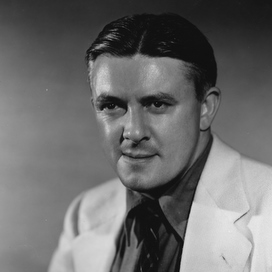
Michael Hoffman’s 2009 translation of Hans Fallada’s novel Alone in Berlin was a great success (the novel sold more than 350,000 copies in the UK alone).

Inevitably, the success of Alone in Berlin led to more works of Fallada (real name Rudolf Ditzen) being released for the consumption of the Western readers among whom, it would appear, there is an appetite for European novels about totalitarianism.

A Small Circus, published in the UK in its (excellent) English translation by Michael Hoffman, was Fallada’s debut novel. He submitted it for publication in 1930 and the novel was published the following year.

According to the foreword (by Jenny Williams), A Small Circus, like many other debut novels, was inspired by Fallada’s experience as a journalist working for a provincial newspaper in the small German town of Neumunster in the district of Schleswig-Holstein. Fallada worked for the local newspaper for two years and was an observer of not only the workings, machinations and petty politicking of provincial journalism but also of the political situation developing in Germany which would bring an end to the Weimer Republic and pave way to the rise of Hitler.

All of which is described in with great bravura in the blackly funny A Small Circus.  

Neumunster becomes Altholm in A Small Circus. It is the late 1920s and the German economy, burdened by the reparation demands of the Treaty of Versailles, is in a freefall. The democratic Weimer Republic is on its knees. In Altholm the Social Democrats (SDP) are in power, led by its frighteningly capable, larger than life, mayor Gareis. In his capacity as a mayor Gareis is also the Chief Commissioner of Police. Gareis is accountable and answerable to the district president Temborius who is based in Stolpe (another fictional town). Gareis’s work is cut out. He has to steer his way through what he sees as obstacles put in his path by other political parties in the region including the Democrats, the Communists, the right-wing Volkspartei, the Reichswirtschaftspartei which represents the interest of the middle-classes, and last but not least the National Socialists who are on the rise with their populist, xenophobic agenda. Then there are the local newspaper such as the right wing Chronicle with its menacing and devilishly cunning chief reporter Stuff who feels obliged to oppose tooth and nail every policy of SDP, the Volkszeitung which supports the SDP, and the highest-selling News which considers itself to be holding the centre position.

The situation in the district of Stolpe is like that which will be described as prevailing in Austria on the eve of its annexation to Germany a few years later: serious but not desperate. However it is about to become desperate for the ruling SDP. The farmers in the region, most of whom not rich and land-owning but small and independent, are seething with rage at what they see as very unfair taxation by the Republic, which they have come increasingly to view as anti-farmers and only having the interests of the working-class at its heart. The farmers form their own movement, Bauernschaft (based on the real life Landvolk movement formed by the farmers in Schleswig-Holstein in the 1920s, bitterly opposed to the taxation of SDP). The proverbial last straw that breaks the camel’s back is an attempt by a couple of hapless employees of the tax department to confiscate the oxen of farmers who are unable (unwilling as the administration sees it) pay the taxes. The tax officials are driven away but the identities of the assailants is captured in a photograph taken by Tredup, the perennially impoverished advertising manager of the Chronicle and a freelance photographer. Tredup sells the photographs to the district administration in Stolpe and Reimers, the headman of the village of Gramzow where the trouble with the tax-officials began, is arrested and thrown in jail in Altholm. The farmers’ movement decides to organize a huge demonstration in Altholm. Gareis, the mayor of Altholm, much to the displeasure of the district president Timborius, decides to give permission for the demonstration to go ahead. Once the decision is made all sorts of characters and forces swing into action vying with each other to add more spice into what is already promising to be a vindaloo. These include in no particular order the Fourth Estate, factions within the farmers’ movement, the district administration in Stolpe, and some fly-by-night characters who have no personal interest or stake in the local affairs in Altholm other than to have a damn good ruckus. No one—including mayor Gareis—is a saint, here, and every trick in the book—including threats, calumny, misinformation, blackmail, bribing—is employed by all the parties. The demonstration duly takes place on the due date and is dealt with unusual severity by the Altholm police force, inexpertly led by the bungling and bombastic Frerksen, the commander of the Altholm police force, who also happens to be a member of the SDP and probably owes his position to him being a lackey—as is accused in the right-wing Chronicle—of mayor Gareis.

The demonstration is a fiasco. To compound the problems for the Altholm businessmen and bourgeoisie the farmers in the region embark upon an unofficial boycott of the town which hurts the already ailing economy of the town. It is very clear that someone is going to have to take the blame for it; heads are going to have to roll. The question is: who would that person be. The person who, for many, is for the high jump is mayor Gareis, who makes it clear that try as he might he is simply unable to comprehend how it was his fault and the chances of him relinquishing the post willingly were less than slim. Frerksen is in trouble, too, for his inept handling of the farmers’ demonstration. District president Timborius’s role in the whole affair is also of interest partly because of his insistence that the farmers’ demonstration should not be permitted under any circumstances but also because of the ‘secret order’ he is supposed to have sent to Gareis on the eve of the demonstration about which the Altholm mayor is acting more coy than a Bollywood virgin looking at her beau with trembling lips,  knowing fully well what is it that is on his mind but acting ignorant all the same. The state brings charges against the torchbearers of the Altholm demonstration. This gives rise to a fresh round of back-stabbing, skulduggery and perjury in which all parties involved come out with flying colours.

When this sprawling, humongous novel of almost 600 pages draws to a close no one, unsurprisingly, emerges as a winner; and most characters get their just desserts.

A Small Circus is anything but small in its scope and the ambition of its author. The cast of characters populating it is extensive. A list given at the beginning of the novel of all the ‘dramatic personae’ that, in small or big way, propel the story further, is very handy, but despite that it tends to get a tad confusing at times. This is (I think) because of the sheer number of characters each and every one of them is up to some or the other shenanigan, but also because of the way the story is told so that the links amongst different strands of the story are not always apparent. The plot is revealed to the reader piecemeal, in snatches and, if you find yourself, from time to time, going back in the story trying to decipher the significance of a comment, say, you wouldn’t be the only one.

A Small Circus, on the face of it, depicts German life in a small rural town at a particular period in the history of Germany in twentieth century. The novel, several decades after it was first published is, still, relevant, not just because what we now know of the events in Germany in the 1930s, the rise of National Socialists and subsequent tragedy, which the novel—in its realistic and, frankly, terrifying, portrayal of Germany’s implosion—so superbly helps the reader to gain an insight into, but also because Fallada touches themes in the novel that ring true even now: the corruption in politics, sycophancy, the poor becoming poorer and rich richer.

A great pleasure of reading A Small Circus is the way the story progresses, which is mostly in dialogues, which, for the most part are quirky, idiosyncratic and funny. The credit for this should also go to the translator Michael Hoffman.

A Small Circus is an impressive novel, a caustic and piercing commentary on the greed, treachery and petty bickering that made Hitler’s dramatic rise to power possible.

Hans Fallada, according to various biographies I read of him on the Net, was a tortured soul. He died a broken man in 1947, of morphine overdose, at a relatively young age of 53, in East Berlin, East Germany where the Soviets had banned A Small Circus because of Fallada’s less than flattering description of the Communists in the novel. The success of Alone in Berlin (which heralded the revival of his works) and subsequent novels, in the West may have come too late for their creator, but it is still a deserving recognition of the genius.


Sunday, 7 February 2016

Book of the Month: Old Masters (Thomas Bernhard)


Old Masters is Thomas Bernhard’s penultimate novel (and my first foray into the Austrian novelist’s dark, misanthropic world). In it we meet 82 year old Austrian music critic, Reger, who, recently widowed, has arranged to meet with a younger critic, Atzbacher, in Vienna’s Kuntsthistorisches museum. Atzbacher has met with the old critic the previous day, at the Ambassador hotel in Vienna, and is curious to know why Reger wants to meet with him again.

As the novel opens we meet Atzbacher, who has arrived at the museum an hour before the appointed time of the meeting with Reger, and has taken a position in the “so called Sebastiano room” of the museum, so that he can observe, unobtrusively, the old critic—who, Atzbacher knows, will be sitting on a settee in the “so called Bordone room” of the museum, in front of the Tintoretto-painting of a White-Bearded Man, as he apparently has done for the past thirty tears—in profile. The day before, Reger had waxed eloquent about the “so called Tempest Sonnata”, and lectured young Atzbacher on the “Art of the Fugue”.

So the novel begins.

It is hinted that Atzbacher is a philosopher who is working on philosophical work over many years which is yet to be published; indeed Atzbacher, as the reader learns later in the novel, has never published anything. Atzbacher watches Reger, as the old man takes his position on the settee which he has appropriated, over the years, as some sort of personal property, sitting on which he has held many a public court, giving others—Atzbacher included—the benefit of his views on matters ranging from Austrian public lavatories to the Old Masters. Atzbacher watches Reger interacting with Irrsigler, the museum attendant, who is happy to serve as Reger’s personal attendant.

As Atzbacher watches Reger, he remembers his conversation with Reger the previous day in the hotel Ambassador. The reader soon learns that Reger is a man who holds the state of Austria in contempt. It is not, however, just Austria of which the old critic disapproves. Reger’s view of the contemporary culture is dismal. Come to think of it, it is not just contemporary culture that Reger rails against; he does not think highly of the old painters: El Greco is overrated; he can’t even draw a hand properly. That the Kunthistorisches museum does not even have an El Greco is proof enough for Reger of the inferior quality of the museum. (The museum does not have a Goya—a “tougher nut” although he, too, can’t paint a hand, either—who holds a slightly higher place in Reger’s esteem.) The old painters are imperfect. They “tire quickly” if you subject them to close scrutiny (as Reger obviously has done with ‘The White-Bearded Man’, over more than thirty years). They always disappoint if we “make them the ruthless objects of our critical intellect.” The closer we look at them, the more flawed they appear. And they mean nothing to us “in the crucial point of our existence.” They are nothing more than survival artists; their art has the despicable Catholic halo around it, patronised by the brainless Hapsburgs who were essentially anti-culture, and did not understand literature or painting. The Hapsburg promoted music only because they found it harmless. Austrian writers have nothing to say and cannot even write down that they have nothing to say. Their books are rubbish, the products of two or even three generations that never learnt to think. Reger has a visceral hatred for Catholicism (you will not be surprised to learn), as he has for Austria. Austria is a pigmy country, full of coverer-ups of crime, a country full of “congenital opportunist cringers”, and a country in which politicians have committed “murderous frauds”. Austria and Vienna have no culture. The Viennese are as monotonous and lacking in taste as the Germans. You walk through Vienna and all you see is “depressing faces and tasteless clothes.” The newspapers report scandals daily, but their calibre has sunk so low that that in itself is a scandal. Austria is apparently one of the dirtiest country in Europe. Vienna’s pissoirs are the dirtiest in Europe. The Austrians have the vilest characters in Europe; they are masters of deceitfulness. Irrsigler, the museum attendant who has served Reger untiringly over decade is a good man—particularly stupid but also particularly honest and undemanding. Not so his wife, though, with her “hysterical voice and hen like walk.” And he can’t stand Irrsigler’s children, either, who hang on to Reger’s coat-tails like burs.

And so it goes on.

The Old Masters, at almost 250 pages, is a spectacular and never-ending rant, which is presented in one continuous paragraph. (If I remember correctly Updike tried this—writing a novel as one continuous paragraph, in Seek My Face, with insipid results). The passages and sentences progress in loops: certain phrases are repeated—not for emphasis, you get the impression, but to convey the contempt—despair, even—of the narrator. Reger is the main protagonist of the novel, and he has his unique way of expression; however, other, even minor and peripheral characters in the novel sound exactly the same. It is as if there is an invisible omniscient puppeteer is controlling all the characters in the novel. I wasn’t sure even after I reached the end of the novel whether Old Masters was just a dyspeptic rant that represented, well, just that; or whether it was a of very sly commentary on art; or whether it was a (deliberately) skewed animadversion of life. It is, however, not random: you get the feeling that the whole novel is a cleverly and intricately plotted performance. The English translation (translated from German by Ewald Osers) I read was described on its jacket as ‘devilishly funny’. I was, again, not sure that Bernhard meant it as a comedy, even though his prose, style, and the nature of the narrator’s rant makes you wonder whether the narrator really means any of what his rant; and, if he doesn’t, is it all tongue-in-cheek? I wasn’t sure. The only thing I was sure about was that Old Masters was not like any of the novels I had read. I loved it.


Sunday, 24 January 2016

Book of the Month: I Served the King of England (Bohumil Hrabal)


I first became aware of the Czech novelist Bohumil Hrabal a few years ago, when I was, as was my habit, then, browsing through the fiction section of the local Waterstone’s. Two of his novels were prominently on display, and, importantly, were available for the price of one. On the front page was endorsement by Julian Barnes, who had described Hrabal as a ‘superb writer’. The combination of a bargain and recommendation from Julian Barnes was too much to resist, and I bought both the novels. They were entitled Closely Observed Trains, and Loudness of Solitude. I added the two novels to the ‘to-read’ list and forgot about them. Sometime ago, in an Oxfam book shop, I came across another novel by Hrabal(The Little Town Where Time Stood Still) and bought it (£1.99, another bargain). I have yet to read this novel as well.
The only novel of Hrabal I have actually read is I Served the King of England, and I borrowed it from the local library.
The narrator of I Served the King of England is a diminutive waiter called Ditie (the meaning of which is ‘child’, apparently). Ditie’s ambition is inversely proportional to his size. He may be a munchkin, and he may be a waiter, but he does not want to remain a waiter (although he would, forever, remain pocket-sized). He wants to open his own hotel and become a millionaire. Ditie works in various hotels, starting with Golden Prague, then The Trichota, and finally Golden Paris. Along the way he meets some memorable characters, such as a co-waiter at hotel Trichota, called Zdenek. As the second world war looms and the country comes under German occupation, Ditie marries a German woman. While Czech patriots are being detained and hanged, Ditie serves the Nazis in various hotels and retreats. After the war he becomes rich by selling rare stamps his wife (who dies during the war) has stolen from the Jews who were sent to their deaths in the concentration camps. With the ill-gotten money Ditie finally achieves his ambition and opens a hotel—the Hotel in the Quarry—and becomes a millionaire. Ditie’s fortunes nosedive with the 1948 Communist takeover of the country, although he does not quite see it that way. As the novel ends Ditie has ended where he began all those years ago: penniless doing manual job in a remote corner of Sudetenland; and indescribably happy.
I Serve the King of England has a picaresque, anecdotal feel to it. The novel, as it moves from one section to the next, seems more like a shaggy-dog story with which some old codger might regale his listeners over a pint of ale (or whatever the preferred alcoholic beverage in Bohemia was in the middle part of the twentieth century). The novel is more than a story; it is a story of stories. And all the stories—whether sunny or dark (and they do get darker as the novel progresses and the Germans invade Czechoslovakia) are fantastical in their tone, be they of the bandmaster uncle of Zdenek, the headwaiter at the Hotel Tichota, or the bets between Ditie and the maître de at the Golden Paris Hotel (who actually served the king of England). It is almost as if reality is filtered through a prism which adds a magical dimension to everyday, mundane, happenstances. The writing is not stream of consciousness, but it takes the form of apparently unorganized juxtaposition Ditie’s perceptions and images as he trundles through life. Yet, as in a collage, it somehow comes together to form a whole that is more than a sum of its part.
Ditie, the narrator and protagonist of I Serve the King of England, comes across, at the beginning of the novel, as a man who is unequal to the task of viewing the world without frivolity. He is a man incapable of looking underneath the surface of things. Ditie is a hedonist. He also emerges as a man, as the novel progresses, lacking in conscience. While working in Hotel Paris in the 1930s Ditie starts learning German. Soon, he is practically the only waiter left in the hotel who would be prepared to serve Germans. The reader is not surprised when a German woman, ‘as short as’ Ditie and with sparkling green eyes, falls in love with him; and Ditie, forever in search of pleasure, marries her. Soon Germans invade the country and the novel enters a darker phase. As the Czech patriots are tortured and Jews are boarding the trains to concentration camps, Ditie subjects himself to the deranged Nazi project of producing ubermensch Aryan children (and produces a son who is mentally retarded). After the war ends Ditie makes his million, but his ‘German past’ continues to haunt him, and he remains persona non grata amongst his old acquaintances. Slowly, but surely, Ditie turns away from his obsession about material wealth and achieves (you hope) inner peace.
I Serve the King of England (the title is a bit of a mystery, as the narrator and protagonist, Ditie, never serves the king of England; he serves Haile Selassie, though, the exiled king of Ethiopia; it is Ditie’s boss at the Hotel Golden Palace, a peripheral character in the novel, who has served the king of England) is a bawdy, rumbustious and, at places, dark satire, which is, at the same time, a commentary on the mid-twentieth century Europe. Via his apparently unscrupulous narrator—who is funny precisely because he refuses to take anything and anybody, least of all himself—seriously— Hrabal is commentating on the emptiness of our existence, which is comic in a macabre way. The language is combative, at times hyperbolic, at times alarming. An intriguing novel.


Wednesday, 6 January 2016

Books Read in 2015


Below is the list of books I read in 2015.
Fiction
  1. The Apologist (Jay Rayner)
  2. Things Fall Apart (re-read) (Chinua Achebe)
  3. The Rosie Project (Graeme Simsion)
  4. The English Teacher (R.K. Narayan)
  5. Kipling and Trix (Mary Hamer)
  6. Barracuda (Cristos Tsiolkas)
  7. The Old Masters (Thomas Bernhard)
  8. Woodcutters (Thomas Bernhard)
  9. The Last Word (Hanif Kureshie)
  10. The Blazing World (Siri Huvstedt)
  11. Boys and Girls (Joseph Connolly)
  12. To Rise Again at A Decent Hour (Joshua Ferris)
  13. Tigarman (Nick Harkaway)
  14. Where’d You Go Bernadette (Maria Semple)
  15. The Windsor Faction (D.J. Taylor)
  16. The Position (Meg Wolitzer)
  17. Lights Out in Wonderland (DBC Pierrie)
  18. The Interestings (Meg Wolitzer)
  19. The Legend of Holy Drinker (Joseph Roth)
  20. Stoner (John Williams)
  21. Strange Bodies (Marcel Theroux)
  22. Meatspace (Nikesh Shukla)
  23. The Dog (Joseph O’Neill)
  24. Empire Falls (Richard Russo)
  25. The Great Fortune (The Balkan trilogy) (Olivia Manning)
  26. The Spoilt City (The Balkan Trilogy) (Olivia Manning)
  27. All Quiet on the Western Front (re-read) (Erich Maria Remarque)
  28. The Golden Notebook (Doris Lessing)
  29. Americanah (Chimimamnda Ngozi Adichie)
  30. Last Friends (Jane Gardam)
  31. The Wife (Meg Wolitzer)
  32. Gilgi (Imgard Keun)
  33. Accidental Apprentice (Vikas Swaroop)
  34. Marriage Material (Sathnam Sanghera)
  35. All the Birds Singing (Evy Wyld)
Non-Fiction
  1. The Back Story (David Mitchell)
  2. How Do  They Do It (Robert Hutton)
  3. Romps Tots and Boffins (Robert Hutton)
  4. The Wicked Wit of Winston Churchil (Winston Churchill)
  5. Selfish Whining Monkeys (Rod Liddle)
  6. Antidote to Positive Thinking (Oliver Burkeman)
  7. Serge Bastarde Stole My Baguette (John Dummer)
  8. My Story as an American Au Pair (Linda Kovic-Skow)
  9. The Shrink and the Sage (Julian Baggini and Antonia Macaro)


    2015 was slightly less disappointing a year than 2014 was in terms of the number of books I managed to read—I read 45 books, 5 more than the books I read in 2014—but nowhere near 2010, when I reached the dizzy heights of reading more than hundred books.

    When I went through the list of books I read in 2015 I noticed that the first book I finished reading was The Apologist by Jay Rayner. I began reading this novel on Kindle between the Christmas of 2014 and the beginning of 2015, but could not finish it before 2014 ended. What is the novel about? If my memory serves me right, it is a satirical novel about a bloke who is very good at apologising (the clue is in the title of the novel) and is hired by multinationals and even the UN (I think) as their apologist. This guy makes a living by telling the world that he (or the organisation for which he works) made a mistake. I can’t now remember how the novel ends—whether that is because I have forgotten the ending or because I did not reach the end of the novel, I have forgotten (which, apparently, is a tell-tale sign of Alzheimer’s; except that I have remembered that I have forgotten, though I can’t be sure). Why did I even buy this novel? Seeing as I bought the novel on Kindle I am sure that there was probably a deal, and the novel was available for 99 p or 50 p or some such ridiculously low price. Also, I was a tiny bit interested in its author. I do not think anyone outside of the UK would have any reason to know who Jay Rayner is—The Apologist is his first foray into the world of fiction writing. Those who are from the UK could also be excused for never having heard of Jay Rayner if they either (a) do not read the culinary section of The Guardian or (b) have never watched the BBC cooker programme Masterchef. Jay Rayner, I am happy to announce, is a celebrated food critic. I have seen him on Masterchef where, with minimum of fuss he is known to turn the contestants into aspic jelly (which, he informs them, with the slight curl of his lower lip—enough to convey the disgust that has filled him at being subjected to the horrors of wading his way through the inedible chicken chaud froid—has not been blended properly with the roux) and make them rue the moment of insanity when they applied to be in the contest. A tad heavy on sarcasm, Jay, and, for that reason, I thought that his debut novel would be the showcase of his trenchant observation and cutting wit. I was disappointed.

    A few of the novels I read in 2015, while they all had widely different themes, had the common factor of utterly absurd plots, which, nevertheless, did not make the novels less entertaining for that.

    Strange Bodies is a novel by Marcel Theroux, son of the prolific novelist Paul Theroux, and the nephew of the (less prolific) novelist Alexander Theroux. Strange Bodies is a bit like Never Let Me Go in that it has the trappings of science fiction but fancies itself as literary fiction. Marcel Theroux takes inspiration from the transhumanistic philosophy of Nicolai Fyodorov (Fedorov, in English), an obscure nineteenth century Russian philosopher who put forth theories about the perfection of the human race and, by extension, extension of human life (or consciousness), which could be described as interesting (or bat-shot mental), and weaves a metaphysical thriller that rivets you from the first few pages and keeps you under its thrall till the end.

    Another novelist who boasts of impressive pedigree is Nick Harkaway (pen-name of Nicholas Cornwell), who is the son of the legendry John le Carre (real name David Cornwell). The plot of Tigerman, Harkaway’s third novel, is as improbable as the pseudonym of its author. The best way to describe Tigerman is that it is a comic book thriller. It is not an easy novel to read (neither is it particularly memorable) but Harkaway is a writer who has a great feel for language, and there are passages in the book remarkable for understated dry wit. The novel has one of the most surreal openings I have read in recent years (a pelican swallows a live pigeon).

    Vikas Swarup, the Indian diplomat who also writes fiction, and whose debut novel, Q and A, was made into the film Slumdog Millionaire, has a female protagonist, Sapna Sinha, in his third novel, Accidental Apprentice. Sapna, a lowly paid employee in a television shop, is selected out of the blue by an eccentric millionaire, Vinay Mohan Acharya, as a potential candidate for the job of the CEO for his empire, which may or may not be in trouble. But there is a catch (there always is). In order to qualify for the job Sinha has to pass seven tests (and let me tell you that these tests are very different from those set by Alan Sugar in his UK television series, The Apprentice), which, Acharya believes, would test whether Sinha has leadership qualities. To make matters more interesting (for the reader) and difficult (for Sinha) she would have no prior inkling as what the tests are and when they would commence: they are ‘life tests’, you see. Accidental Apprentice is the second book of Swarup, which I have read (the first one was Six Suspects, his second novel). Swarup has a penchant for the hyperbole, and the way he uses language ensures that there is a constant undercurrent of hysteria and emotions that are threatening to run out of control. The plot is preposterous and some of the twists test the limits of your credulity; however, for all that Accidental Apprentice is an enjoyable romp. Vikas Swarup can be called as an Indian Jeffry Archer (and I say this as a compliment).

    The Irish/American novelist Joseph O’Neil’s earlier novel, Netherland, was shortlisted for the Man Booker Prize a few years ago. I had liked that novel. For that reason I had expectations when I began reading The Dog, O’Neil’s most recent novel; and these expectations were largely met. If you like your novels to be plot driven, The Dog is probably not the novel for you. If you like humour, but prefer it to be as subtle as the performance of a circus clown, The Dog will not appeal to you. The Dog tells the story of its unnamed protagonist (his name, which, the reader is informed, begins with the letter ‘X’, is so embarrassing that he refuses to divulge it), an attorney, who takes up a job in Dubai for an old school acquaintance, a scion of an extremely wealthy Lebanese family which may or may not have made its fortune in shady business deals. (As an aside, The Dog is the first literary novel that I have read, where the action—in a manner of speaking—takes place in Dubai.) You will not be surprised to know that it does not end well for the unnamed protagonist, who, for an attorney, shows a touching (if ultimately misplaced) faith in the essential goodness of human nature. You can view The Dog as a commentary on things that are going awry in modern existence.

    Christos Tsiolkas, like Joseph O’Neil, had one of his novels shortlisted for several prestigious literary awards—the brilliant The Slap. I had enjoyed The Slap very much, and with great anticipation I read Barracuda, Tsiolkas’s next novel, only to be disappointed. It did not work for me. I have reviewed this novel earlier on the blog.

    Unlike O’Neil and Tsiolkas, DBC Pierre (another novelist with a pseudonym; real name Peter Finlay) won the Booker Prize for his (debut) novel Vernon God Little, way back in 2003. Vernon God Little was a novel that divided readers and reviewers, if I remember correctly. There were those who liked the novel, and there were others, who, paraphrasing a friend, felt that to call the novel shitty would be to malign faeces. It had taken me a while to get into that novel, but once I did I’d thought it was hilarious. Lights Out in Wonderland, the novel of Pierre which I read in 2015, has a ludicrous plot that is adorned with outrageous set-pieces. The prose lurches between banal (I lost count of the number of times the words ‘limbo’ and ‘nimbus’ appeared) and coruscating. On the whole, it is an uneven effort by the 2003 Booker-winner, but, still, a testimony of the outrageous imagination of DBC Pierre.

    Siri Hustvedt’s The Blazing World, has, at its heart, a hoax its (dead) protagonist plays on the art world. It also attempts to provide a wry commentary on sexism in the art world. The Blazing World is (for the want of better phrase) an intellectually sophisticated novel that is a meditation on identity and how a life can be perceived differently, as if through a kaleidoscope. The novel drags on a bit but is not as boring as Joseph Connolly’s Boys and Girls (see later) which, admittedly, is not saying much.

    I read, for the first time, The Golden Notebook, Doris Lessing feministic totem, in 2015 (although in the preface of the edition I read Lessing was at pains to point out repeatedly that she did not consciously set out to write a feminist novel). One strand of the novel deals with the intellectual tortures of the middle-class English Communists of the 1960s: as the news of the atrocities in Russia begins to leak out, their rose-tinted view of Uncle Jo can no longer be sustained without premier league intellectual somersaults and distortions, which many of them are incapable of performing. Reading this bit of the novel fifty years on, when the full horror of the Communist regimes all over the Eastern Block has been laid bare, makes it difficult to appreciate the impact of these revelations at the time. (It may also be argued that Communism in England was never really taken seriously by the British public, and did not, for that reason, enter mainstream politics. The miseries and vexations of the Communists in the novel over whether or not they should stay in the party, borne out of an inflated sense of self-importance and the misplaced notion of the impact of the ideology they hold so dear on the wider society, are, inadvertently, amusing, almost comic.) The other strand, the one Lessing was so reluctant to own, but which has ensured the place of The Golden Notebook in the pantheon of the great novels of twentieth century, is of feminism. Anna Wulf, Lessing’s heroine, is a free woman, a feminist. There is a kind of self-consciousness about this portion of the novel. The situations (for example, between Anna and Molly’s husband, or between Anna and Molly’s son) and the dialogues (for example, between Molly and Anna) have theatricality about them; they seem like (very obvious) devices for Lessing to make her points. This part of the novel did not flow easily for me. Maybe that is just me.

    Joseph Connolly’s Boys and Girls, described on the blurb as a ‘superb satire of modern morality’, was, and it gives me no pleasure to say this, the most boring novel I read in 2015, beating Evy Wyld’s All the Birds Singing by a whisker (although All the Birds Singing won hands-down when it came to pretentiousness). Boys and Girls is set in the modern times, alright, but it is more of a high-octane melodrama than a satire. Connolly has taken a kernel of an interesting idea and tried to inflate it. Most of the novel is written in the stream of consciousness style, with inner monologues of the characters. Most of the characters do not have anything interesting to say, and they all sound exactly the same. A lot of the novel sounds like just drivel. Connolly was once described as ‘Wodehouse on acid’. In Boys and Girls he sounds more like ‘Wodehouse with Alzheimer’s’.

    Evy Wyld’s All the Birds Singing was strongly recommended by a member of my book-group. This guy does a job at the local council that should not even exist (the job; not the council); supports Labour party (he is overjoyed now that Comrade Corbyn is in charge); and is forever moaning that is good-for-nothing, brain-addled son, who is incapable of holding down a job because of his ‘issues’, is not getting Disability Living Allowance because the bloody psychiatrists wouldn’t accept that the boy is severely depressed and not a lazy skunk-smoker. The man has managed to get himself on some sort of group for the local library that selects ‘summer reads’ every year. Apparently All the Birds Singing was the unanimous first choice of this group (no doubt comprising morons like him with as much relation to literature as of a beef burger to haute cuisine). All the Birds Singing is about an Australian woman who lives on an unnamed island in Britain. The story of this woman has two strands. The present, which is told in the past tense; and the past, which is told in the present tense (and, in case that is not irritating enough, in reverse order, that is going back in time). We learn that the woman, who has a man’s name (Jake), was a prostitute in Australia after she ran away from home before she was kept a prisoner by an elderly Australian pervert. She then escapes from the clutches of the pervert and washes up in Britain where she becomes a sheep farmer. Evy Wyld is apparently on the Granta list of the most talented or the most exciting young novelists (or some such ludicrous title) in Britain. If that interests you, you can give All the Birds Singing a go. Or you can subscribe to my view that stabbing yourself in the foot would be less painful than reading this novel.

    I can’t quite figure out how I ended up reading three novels of the American novelist Meg Wolitzer, in 2015: The Position, The Interestings, and The Wife. Of the three The Wife was the most uninteresting; The Position was the most interesting; and The Interestings was not all that interesting. Wolitzer, however, writes extremely well; it is a pleasure to read her prose which manages the feat of keeping its distance from the dramas going on in the protagonists of her novels, and yet remaining connected.

    RK Narayan, the novelist Graham Greene admired the most, wrote many novels in his long life, a significant proportion based in the fictional town of Malgudi in South India. The English Teacher is supposed to be Narayan’s most autobiographical novel, based on Narayan’s short-lived marriage to a woman much younger than him and who died young (leaving behind a daughter whom Narayan, who did not remarry, raised alone; the daughter, too, pre-diseased Narayan). I have read a few novels of RK Narayan, which were much lighter in their mood and tone than The English Teacher. The English Teacher, like Narayan’s other novels, touches your heart with the simplicity of its prose, more alluring than any linguistic pyro-technique.

    I read two translated novels of the great Austrian novelist, Thomas Bernhard: The Wood cutters and Old Masters. It is impossible not to get sucked into the cantankerous, nihilistic rants of Bernhard’s protagonists who view death as a welcome solution to the bleak existence.

    Another member of my book-group, when I asked his opinion about Olivia Manning’s Balkan Trilogy, waved a dismissive hand, and followed it with the dismissive comment, “literary Mills and Boons.” Undeterred, I started reading the trilogy, and read the first two books: The Great Fortune and The Spoilt City. I greatly enjoyed reading the two novels which turned Rumania and Greece as the grand canvas on which a vast array of characters play out the dramas of their lives. The novels depict the advent of the Second World War from the eyes of the expatriate British who are ultimately outsiders in the Balkans. I have not read any of the Mills and Boons novels, but I can see why the member of the book-group felt the trilogy was “literary Mills and Boons” (primarily because he is a stuck up, snobbish ass who is incapable that women can be serious writers, but, perhaps, also because the novels focus more on their quotidian concerns and problems as the World War looms). A great strength of the novels is Manning’s keen eye for the absurdities, the foibles and the pretentiousness. The prose is addictive. I am at a loss to figure out why I did not complete the trilogy by reading the last of the novels, Friends and Heroes, probably because I was waylaid into reading some book selected by the Bookgroup which I otherwise would not have read (and should never have read). I shall read Friends and Heroes this year.

    Top 10 novels read in 2015
  1. The Old Masters (Thomas Bernhard)
  2. The Great Fortune (The Balkan trilogy) (Olivia Manning)
  3. The Spoilt City (The Balkan Trilogy) (Olivia Manning)
  4. Woodcutters (Thomas Bernhard)
  5. The English Teacher (RK Narayan)
  6. To Rise Again at A Decent Hour (Joshua Ferris)
  7. Empire Falls (Richard Russo)
  8. The Dog (Joseph O’Neill)
  9. The Golden Notebook (Doris Lessing)
  10. Things Fall Apart (re-read) (Chinua Achebe)


Sunday, 6 December 2015

Book of the Month: Lost Horizon (James Hilton)


Lost Horizon is one of those novels which were very popular in their times but are not talked about often these days. It rarely gets featured in lists such as ‘Modern Classics’, ‘1000 Books You Must read Before You Die’, ‘100 Greatest Books of the Twentieth century’ etcetera. Hilton, who died in 1954 at the age of 54 with liver cancer, is a largely forgotten name. Yet Lost Horizon is the novel that gifted English language a phrase which is widely used: Shangri-la, representing a secluded and tranquil utopia of great beauty and serenity.


The plot of Lost Horizon is simple. Four Westerners—three men and a woman—are being evacuated out of Baskul, a town in Afghanistan, as the revolt by the ‘locals’ against the British rule gathers momentum. The plane, which is supposed to take them to the (relative) safety of Peshawar, is hijacked and they are taken, instead, to a remote monastery somewhere in Tibet. The monastery, which is called Shangri-la, is situated in a valley—of extraordinary natural beauty—called The Blue Moon Valley. Shangri-la, its visitors learn in due course, is ruled by a benevolent autocracy of lamas. It is almost inaccessible to the outer world because of the difficult terrain. In the monastery the four Westerners encounter a world of tranquillity, peace and beatitude. The highest position one can achieve is of the High Lama. (Needless to say it is more difficult to achieve the high lamahood than get British citizenship.) The four Westerners discover soon enough that their arriving at Shangri-la was no accident; that they were chosen. Chosen for what? To replenish the dwindling population of the monastery, for a start. The High Lama also has more grandiloquent plans in his mind for one of the hijacked, a man called Hugh Conway. (Indeed Lost Horizon can also be viewed as the story of Hugh Conway, told in retrospect by the unnamed narrator of the novel, a neurologist, no less, who is a childhood friend of Conway.) The four Westerners react very differently, if a tad formulaically, to their situation. Conway, a veteran of the WW1—it is heavily suggested that the war has scarred him psychologically for ever—has spent the last fifteen years drifting from one uninspiring job to the next in British consulates across the globe. He finds himself settling rather easily in the non-demanding environment of Shangri-la. He wouldn’t mind spending the rest of his life in the monastery, which, he finds, to his surprise, is well equipped with all the comforts a European might expect. Bernard, the American amongst the group, also finds Shangri-la congenial; but for a different reason. ‘Bernard’ is the American’s assumed name; he is in fact a Wall Street fraudster who is on the run, having swindled more than a million dollars. He is unsurprisingly not in undue hurry to return to the outside world where he knows not—or knows only too well—what reception might await him. Ms Brinklow, the only woman in the group, is a missionary; and, like all the deluded missionaries, she decides that all her life was but a wait for this moment when she would be in Shangri-la and the Blue Moon Valley, so that she could bring the heathens to Jesus. That leaves Mallinson, the youngest of the group and Conway’s deputy in the British Consulate in India. Mallinson reacts to the prospect of staying in the remote lamasery as one might to an allergy. To say that Mallinson is unhappy in Shangri-la is like saying Hitler was a bit underwhelmed by the Jews. He finds Shangri-la creepy, the dilatory talks of their Chinese guide unendurable, and is chomping at his bits to catch the first available flight out. Except that there is no flight either coming in or going out of Shangri-la. Mallinson keeps on pestering Conway to ‘do something’ about the situation and is peeved, quite unreasonably—you can’t help thinking—, when Conway points out to him (reasonably) that given the situation nothing can be done. The remote lamasery is visited by porters from the outside world, once every few months, to provide it with supplies that would ensure that the high lamas would live in the style they have been accustomed to—there is no reason why you should not have hot bath just because you are living in the Tibetan wilderness. How do the lamas pay for all the comforts, which, at a conservative estimate, would be equivalent of a year’s revenue of an average Maharaja in the British India? They pay in gold—physical gold to be exact. (Did I forget to mention that the Blue Moon Valley also has a gold mine in it?) The Chinese guide who brings the four Westerners to Shangri-la after their plane crash-lands in the valley, informs them that the next batch of porters will arrive in a couple of months and the visitors, if they wish, can leave Shangri-la in their company. Only Mallinson declares his intention to take up this offer. Conway, in the meanwhile, is informed that the High Lama wants to see him, an honour unheard of, according to the Chinese guide, in the history of lamasery, as no resident—let alone a visitor—is allowed to meet the High Lama before he has spent a minimum of five years in the lamasery. A suitably impressed Conway is taken to the inner sanctum of Shangri-la where the High Lama lives. At this stage the narrative becomes a tad fantastic. The ancient lama—the wrinkles on whose face, if joined up, would go all the way to Lhasa—is literally ancient. He tells Conway that he is more than two hundred years old. How has he managed to reach such ripe old age? As they say, it is all in the air; plus some local drug with narcotic properties of which the lama has been availing himself every day for the past 200 years (which might explain his tranquil disposition). Nobody in Shangri-la is as old as they look; they are, at the very least, several decades older. For example, there is a Frenchman who was a pupil of Chopin and has, in his collection, a few kickass musical notes of Chopin not known to the outside world. And, by the way, none of the most recent additions to the population of Shagri-la would be going anywhere any time soon, although Conway is not to breathe a word about it to the others, especially Mallinson, who is prowling about looking more sore than a bear with a headache. Conway, who no doubt has insincerity as one of his many talents, colludes with the High Lama. Next comes the big surprise. The reason Conway is accorded a darshan of the High Lama so early in his stay is not a coincidence; neither is it a whim on part of the lama, who, I shall thank you to remember, is not going senile. Conway has been summoned because the old lama is finally going to kick the bucket. How does he know this? Because he is telepathic. He has discerned that Conway is the man best suited to succeed him. How does he know that? By dint of the same powers (telepathy). So it is all sorted. There are four additions to the dwindling population of Shangri-la. Agreed, one of them (Mallinson) is staying under duress, but, as the High Lama declares (not without reason), he has hundreds of years to come to terms with the knowledge that never again would he set foot in Piccadilly Circus. And one of the others (Conway) has agreed to take over the daily running of the lamacracy. What is the problem? The problem is Mallinson. He has been doing a bit more than just fizzing like a lightbulb about to go out. He has managed to get to know one of the Chinese residents of Shangri-la, who looks like she is 19. (He knows she is young because he has come to know her very intimately, if you get my drift.) And, as he tells Conway excitedly, the girl is willing to elope with him with the porters, who, by the way, have arrived. Mallinson is unconvinced by Conway’s assertion that the girl is probably 90 rather than 19 and that he, Mallinson, should really give a serious thought to living for the next two-hundred years in Shangri-la, contemplating life and doing everything in moderation. What will Conway do? Will he attempt an escape with Mallinson (which would also be a definite way to find out whether the old lama was telling him a porky about having lived for two hundred years), or will he take up the offer of the Chief Executive position at the Shangri-la trust? You will have to read the novel to find that out; I feel as if I have spilled enough beans already.


Lost Horizon, upon its publication in the 1930s, became hugely successful. It sold more than a million copies and was the first blockbuster novel of James Hilton, who had published a series of not very successful novels in the 1920s. It was also made into a popular Hollywood film of the same name starring Ronald Coleman and Greer Garson.


Reading more than 80 years after it was first published one can see the appeal of Lost Horizon at the time. The world had plunged into the Great Depression, and people were finding out (as we are doing now) that material wealth is ephemeral and not a guarantee to a peaceful, happy existence. Lost Horizon, with its depiction of the Eastern world as something serene and beyond the reaches—even comprehension—of the Western mind, probably appealed to people. (This is just a guess; I haven’t put this hypothesis to test.) Therein also lies (I think) the limitation of the novel. The view of the East as something mystical and un-tethered to the materialistic needs was probably one of the views of the East that was prevalent in the West, and Lost Horizon depicted a picture of the orient that answered to this (benign) stereotype. Viewed in this light Lost Horizon becomes yet another orientalist novel. There is also an unspoken assumption of the superiority of the Western culture throughout the novel. The lamasery might have been in the back and beyond of Tibet, but the lamas listen to the Western classical music (the High Lama prefers Mozart to Chopin); and they study renaissance texts as well as English novels of the nineteenth century (Bronte sisters get a mention). How did a lama sitting in a lonely monastery beyond the Karakorum mountain range come to know about Mozart and Chopin? He knows because he is a Westerner himself, a Frenchman. With a few exceptions, such as the Chinese guide and Mallinson’s Chinese girlfriend, the inhabitants of Shangri-la are Europeans. High Lama has discovered that the oriental races somehow can’t live to be 250; only the Westerners can do that. He also wants to put to test his hypothesis that Americans under suitable conditions would outlive everyone else; hence the hijacking of Bernard, never mind he is a wanted criminal. Next to nothing is said about the (local) residents of the Blue Moon Valley, presumably because they are redundant to the thematic development of the novel.


In Lost Horizon James Hilton created a world that, while it required suspension of disbelief on the reader’s part, gave a tantalizing glimpse of what some might consider as a higher order of existence, in a manner that was appealing to the Western mind. It is also a kind of adventure story—with its four Western protagonists venturing into the exotic and mysterious East—minus the edge-of-the-seat feeling one would normally associate with an adventure story. Mallinson is the only one who is not content to just chill out and soak in the Shangri-la experience; however, he does not actually do anything about his situation, other than repeatedly (and futilely) exhorting Conway to plan their escape, till almost the end of the novel. Hilton’s prose has the quality of hypnotic simplicity, which, while it has its allure, ensures that your adrenal glands are not overworked.  


Lost Horizon is a moderately entertaining novel. It may not be a masterpiece (hence its absence from all the lists mentioned at the beginning of this post), and the story-line is preposterous; but don’t be surprised if, upon finishing it, you wonder, if only for a few moments, how nice it would be to spend time (OK, not your whole life, especially if it is going to be in excess of 200 years) in Hilton’s Shangri-La.