Showing posts with label Cvjetko Popovic. Show all posts

Saturday, 12 July 2014

The Event that Sparked World War I: How it Ended for the Plotters


Vaso and Popovic were the youngest of the conspirators and in better physical health. They were the only two with a direct involvement in the assassination who survived the prison sentence. However, Popovic’s health was ruined in prison; he was diagnosed first with tuberculosis, then with rheumatism.

In 1917, after the Russian revolution, the conditions improved. Vaso and Popovic were put in one cell together and the prison guards, many Czechs, but also a few Germans, began treating them with greater consideration.

Both Vaso Cubrilovic and Cvjetko Popovic were released in 1918 at the end of the Great War, and lived into old age.

Vaso Cubrilovic, later life

                     Vaso Cubrilovic, 17 years of age, at the time of his arrest

Vaso in fact achieved modicum of success, both academic and political, in his later life. After his release from prison, Vaso returned to Sarajevo, where he finished gymnasium in 1919. He then moved to Belgrade, Serbia, where he graduated in general history at the faculty of philosophy. In 1929 Vaso obtained Ph.D at the faculty of philosophy (Belgrade), where his thesis was 'The Bosnian Uprising 1875-1878'. For the next forty years, Dr. Vaso Cubrilovic worked as a professor of history at the faculty of philosophy.  

Vaso Cubrilovic was the founder member of the Serbian Culture Club in 1937.

In March 1937, Vaso Cubrilovic presented a memorandum in a meeting which ensured that he would, in the fullness of time, be embroiled in another controversy.

The title of Vaso’s paper was ‘Expulsion of the Albanians’. The paper began with the following sentence: ‘The problem of the Albanians in our national and state life did not arise yesterday.’ The memorandum went on to criticise the ‘intractable character’ of the Albanians. What was Vaso’s solution to the ‘Albanian problem’? Massed resettlement of the tens of thousands of Albanians from Kosovo (in South Serbia) back to Albania and Turkey.

Vaso was blunt about the ‘methods’ that could be used to achieve this goal. Under the section 'The Mode of Evacuation', Vaso commented:

"It is well known that the Moslem masses are generally readily influenced by religion and are prone to superstition and fanaticism. Therefore, we must first of all win over the clergy and men of influence through money and threats in order for them to give their support to the evacuation of the Albanians. Agitators, especially from Turkey, must be found as quickly as possible to promote the evacuation..."

Vaso went on to 'recommend' state coercion and fomenting conflict (which could be presented to the world as the conflict amongst different clans) to gain complete Serbian control in Kosovo.

This was the time when the Nazis were in power in Germany. Hitler was expelling thousands of Jews, while in Soviet Union Stalin was forcibly resettling tens of thousands across the Union. Forced resettlement of a few thousand Albanians, Vaso argued, would hardly start a world war. Plus, he reminded the congregation, he was proposing nothing new. Way back in 1878, when the control of Bosnia and Hercegovina was passed on to the Austro-Hungarian Empire, Serbia had used similar tactics with great efficiency. 

The above lecture leaves the reader or listener in little doubt as to what Vaso Cubrilovic’s views were with regard to the Kosovo problem; however it is unclear to what extent a speech delivered in front of a bunch of academics in the 1930s came to influence the policies of Slobodan Milosevic who was the president of Serbia for almost a decade from 1989 onwards and subsequently faced charges of war crimes and genocide.

While there are those who cite Vaso Cubrilovic as the architect of ethnic cleansing, there is no evidence that the Serbian policies in the 1990s were influenced by Vaso’s lecture more than fifty years earlier. Rather, his speech could be seen as representative of many in Serbia, over generations, who fiercely believed that Kosovo should be part of Serbia. It is beyond the scope of this posting to go into the bloody and destructive Balkan conflict of the 1990s, but it seems pretty clear that ethnic cleansing was practised by all the parties involved in the bloody conflicts, and not just the Serbs.

Vaso achieved some political success too in his mid-life. After the Second World War Vaso was, for a few years, the Minister for Agriculture in Marshal Tito’s Communist regime. It was during this period that Vaso saved the life of his former fellow conspirator and prisoner Cvjetko Popovic.

Immediately after he seized power Tito started a terror campaign against fascist collaborators. Thousands of intellectuals suspected of harbouring fascist sympathies were arrested and executed without trials. Amongst them was Cvetjko Popovic, who by that time, had become the director of a teacher training school (therefore highly suspect in Tito’s eyes). At great personal risk Vaso Cubrilovic wrote a long letter to Tito’s interior minister, vouchsafing Popovic’s patriotic credentials and delineating his role in the 28 June plot to assassinate Ferdinand. Surely a man who was prepared to lay down his life for Serbia couldn’t be her enemy? Popovic was spared (although his brother was executed).

Vaso’s life, however, was not without regrets. His only son Milos fought as a teenage soldier for Tito’s Partisans against the fascists and was involved in fierce fighting in 1945. He lost his mental balance as a result and, to Vaso’s great sorrow, spent the rest of his life in locked psychiatric hospitals. Milos died a few years before Vaso.

Vaso Cubrilovic never really enjoyed robust health after his release from prison in 1918. Despite this he went on to lead a very long life and died in 1990.

                                                    Vaso Cubrilovic in later life

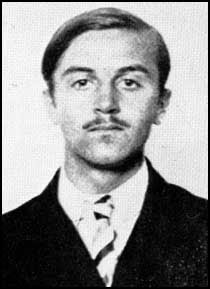
Cvetjko Popovic, later life

After his release from prison Popovic returned to Sarajevo and started teaching. He became a professor of philosophy and eventually became a curator of the ethnographic museum in Sarajevo. According to Wikipedia Popovic died in 1980, in Sarajevo. The archives of an American newspaper show that a reporter had tried to interview Popovic in 1964 about his role in the 1914 assassination of Ferdinand, but Popovic, who, at that time, was living in Sarajevo and was the curator of the Ethnographic Museum had refused to speak. The brief article mentions that Popovic was reluctant to speak about it and certainly not to strangers. 

Decades later, in 1969 Popovic, in an interview to an American newspaper, recalled the morning of the assassination. 'The sun had come up hot in the clear sky,' Popovic recalled. It was a bright sunny morning, which apparently posed Popovic with a problem. It had rained for days prior to that day. He now had to think of a way to conceal the pistol and bomb he was carrying.It was 10 o'clock and the crowds had begun to gather. The seven assassins ('the seven of us') were spread across the area, 'each armed with either grenades or pistols or both'. (This seems like hindsight memory on Popovic's part. It is highly unlikely that at the the actual time of the assassination Popovic was aware that there were six others besides him involved in the plot.) The sound of the royal motorcade grew nearer, the crowd surged forward, and suddenly Popovic knew that he was in 'grave trouble'. The reason he felt he was in grave trouble (so he told the American interviewer in 1969) was because he knew that he had to hit the bomb against something hard, 'like the wall behind me' and wait for 10-11 seconds before he lobbed the bomb. If he moved ahead with the crowd there would be no hard surface available against which to hit the bomb. On the other hand, if he stayed back and hit the bomb against the wall, he would have to lob the bomb over the heads of people in front of him. In the event Popovic did nothing; but that was because (so he claimed in 1969) he heard a muffled sound, 'like a grenade that had fizzled'. There was lot of shouting and 'milling about' and no one noticed Popovic with his grenades and pistol. That did not stop him from panicking. As Gavro Princip, who eventually killed the Archduke after Nedjo Cabrinovic's failed attempt, sat in a nearby outdoor cafe to drink a cup of coffee and think of his next move, Popovic went around in a daze, thinking they had failed. Suddenly he heard 'a great shout over by the river, and I knew I was wrong. I just knew.'

Popovic died in Sarajevo, in 1980.

Ivo Kranjcevic

Kranjcevic was the only Croat involved in the plot to assassinate the Archduke. He only had a peripheral involvement. As seen in an earlier post, Kranjcevic agreed to hide the weapons of Vaso Cubrilovic after the assassination. He did not hide the weapons in his own house but in the house of a relative and implicated them, too, in the plot.

Kranjcevic paid dearly for his foolishness and spent years in prison in harsh circumstances. However, being young and in good physical health, he survived the prison and lived into old age.

The exact year of Kranjcevic’s death is not known, but he carried on living in Sarajevo in relative obscurity (and possibly poverty). In the 1960s, roughly fifty years after the assassination, Kranjcevic was interviewed by an American magazine. A short video clip of the interview is available on the net. In the clip Kranjcevic, a tall, hefty man with white hair, is seen complaining that the world had forgotten the heroes of 28 June 1914.


Friday, 11 July 2014

The Event that Sparked World War I: The Trial and Outcome

There were a total of 25 defendants. Some of their names are as follows:

There were the six main conspirators (Mehmedbasic, aged 27, was missing).

Gavro Princip (aged 19), Nedjo Cabrinovic (aged 19), Danilo Ilic (aged 24), Trifko Grabez (aged 18), Vaso Cubrilovic (aged 17), and Cvjetko Popovic (aged 16).

Then there were others:

Ivo Kranjcevic (aged 19), who had hidden Vaso’s weapons after the assassination; Lazar Djukic (aged 18) who had introduced Vaso to Danilo; Veljko Cubrilovic (aged 28) the ‘teacher gentleman’ who had helped Gavro and Grabez to smuggle the weapons from Priboj to Tuzla; and Misko Jovanovic (aged 36) the cinema owner from Tuzla who his the weapons in his house.

Then there were the peasants who had helped Gavro and Grabez in their travel. These included Mitar Kerovic (aged 65) and his three sons, Nedjo (aged 28), Jovo (age unknown) and Blagoje (aged 34), and their friend Cvjan Stjepanovic (aged 37) who had accompanied Gavro and Grabez in their cart journey from Tobut to Tuzla.

The other peasants who had helped Gavro and Grabez in their journey were rounded up too. These were Mico Mimic (aged 26), Jakov Milovic (aged 43) and Obren Milosevic (aged 38).

Finally the three unfortunate members of the Croatian family where Ivo Kranjcevic had hidden Vaso’s weapons, the Momicinovics, were in the dock: Ivan Mimocinovic (aged 67), his son-in-law Franjo Sadilo (aged 43), and Franjo’s wife Angela Sadilo (aged 38).

Angela was the only woman in the trial.

The heir to an empire (albeit in its terminal decline) had been killed; someone had to hang. The trouble for the authorities was that all those who had directly participated in the assassination and were caught were all younger than 20 (there would be some uncertainty about Gavro’s age, but that would be cleared in due course and he too would be deemed to be under the age of 20) and, according to Austrian law, could not be executed. Only the main conspirators who had gone out with guns and bombs on that morning on 28 June to assassinate Ferdinand could be charged with murder and all five of them were too young to be hanged. The rest—Veljko, Misko, the peasants, and even Danilo Ilic could only be charged with being accessories to murder; and that was not a capital crime.

The Empire charged five of the defendants (Gavro, Nedjo, Grabez, Popovic and Vaso) with high treason. The rest were charged with being accessories to high treason. High treason was a capital crime and being accessory was also a capital crime. Therefore if any of the five charged with high treason were found guilty, the accessories would be found guilty of capital crimes. And although it still meant that the five could not be executed (being too young) some of the accessories who were in their twenties could be executed.

That’s what happened.

The trial began. There was no jury. Instead the president of the court, a judge named Luis von Curnidali, sat with two fellow judges. (After the trial, Curinaldi retired from public life, went to live in a monastery and became a friar.)

There was no public gallery. None of the relatives of the defendants was allowed to attend.

The Empire provided all the defendants with lawyers; however, with the exception of Dr. Rudolf Cistler, who represented the Cubrilovic brothers, the lawyers seemed almost embarrassed to represent the defendants and, at best, put up a half-hearted defence. (It has to be said though that Gavro’s lawyer conclusively proved to the court that his client was indeed younger than 20 years of age.)

Cistler was a German and put up a spirited, if slightly curious, defence. He challenged the legality of the annexation of Bosnia and Hercegovina to the Austrian Empire. He claimed that the Empire had never formally completed the annexation of the region. Therefore the region was technically still under Turkish rule. Ergo, none of the defendants could be charged of high treason. It was of no use; the Judges’ minds were made up. Cistler was reprimanded for showing contempt towards the Emperor.

When the defendants were invited to address the court, only Nedjo Cabernovic took up the offer. His voice cracking with emotion, Nedjo gave a long speech.

Nedjo began his speech by saying that they did not hate Austria, but reminded the court that after taking control of the region 33 years ago Austria did nothing for its people. He went on to speak about his own anarchist ideas. He spoke about how the conspirators came to view that Franz Ferdinand as the enemy of the Slavs and, while no one told them directly to ‘go and kill him’ (an indication perhaps that neither The Black Hand nor Young Bosnians were behind the assassination), they came to have idea in the milieu they lived in.

Nedjo concluded his speech with the following words:

‘There is something else I would like to say. Although Princip plays the hero, all of us play the hero. Nevertheless we are very sorry, because we did not know in the first place that the late Franz Ferdinand was the father of a family. We were deeply touched by the words he said to his late wife, “Sophie, stay here, for our children.”

Think what you like of us but we are not criminals. For myself and in the name of my comrades I beg that the children of the late Heir Apparent forgive us; and you render whatever verdict you like. We are not evildoers, we are honest people, honourable, idealistic, we wanted to do good, we loved our people, we will die for our ideals.’

Nedjo was weeping by the time he finished his speech.

As soon as Nedjo finished Gavro leapt to his feet and said that Nedjo was not authorized to speak in his name. It seems that Gavro by this time was conscious of how posterity would judge him and was keen not to be seen as seeking forgiveness.

The judges took five days to reach the verdict.

On 28 October 1914, exactly 4 months after Franz Ferdinand met his end, the verdict was delivered. By that time the Great War was in its third month.

Out of 25 defendants 9 were acquitted, including all members of the Croat family (the Momicinovics) whom Ivo Kranjcevic foolishly involved in the plot.

Gavro Princip, Nedjo Cabrinovic and Trifko Grabez were each sentenced to 20 years of penal servitude.

Vaso Cubrilovic received 16 years while Cvjetko Popovic received 13 years.

All of them were to have their imprisonment intensified by solitary confinement in a dark cell on 28 June each year. Gavro who killed Ferdinand was to, in addition, have one day of fasting each month.

Lazar Djukic and Ivo Kranjcevic were each given 10 years’ sentence.

Old Mitar Kerovic was sentenced to life imprisonment while his son Nedjo and Jakov Milovic were sentenced to be hanged. The sentences of the Kerovics were subsequently commuted to 20 years, while Miovic’s sentence was commuted to life imprisonment.

Danilo Ilic, Veljko Cubrilovic and Misko Jovanovic were sentenced to be hanged and were not granted any reprieve or amnesty.

After the conspirators were returned to prison after the verdict, a Jesuit priest visited Nedjo Cabrinovic in his cell. He had with him blanket forgiveness from Franz Ferdinand’s children. The children had forgiven him because he had repented and expressed his regrets. After he handed him the letter the priest proceeded to deliver a lengthy sermon to Nedjo. Nedjo who was an atheist was apparently so surprised that he could not utter a word in riposte.


Thursday, 10 July 2014

The Event that Sparked World War I: The Aftermath


The day Franz Ferdinand was assassinated on Appel Quay in Sarajevo, the first to disappear from the scene was Mehmed Mehmedbasic. Indeed Mehmedbasic did not wait for Gavro’s shooting. He scarpered as soon as he heard Nedjo’s bomb go off.

As mentioned in a previous posting, Mehmedbasic was the only one of the plotters who had a direct involvement in the assassination who escaped and never stood the trial.

The details of Mehmedbasic’s escape are sketchy. What is clear is that he did not hang about in Sarajevo, indeed Bosnia, after the assassination. He stayed in Sarajevo for two nights, in the company of some Muslim men who were studying to be imams. He left Sarajevo on 30 June 1914. By the time Austrian police identified the entire group Mehmedbasic had reached Montenegro.

The Austrian asked for Mehmedbasic to be arrested and sent to Sarajevo to stand trial. Montenegro was a small kingdom at this time, largely neutral but also pro-Serbian in its outlook.

Mehmedbasic, upon his arrival in Montenegro, had wasted no time in bragging about his role in the assassination, although he, the first in the line of the assassins Gavro and Ilic had lined up on Appel Quay to ‘welcome’ the Heir-Apparent, had not actually acted when presented with the opportunity and had run away from the scene at the earliest opportunity. He was arrested by the Montenegro police and he readily admitted to his culpability.

Mehmedbasic was jailed, but he escaped. It is possible that the jailers abetted his escape.

Montenegro informed the Austrian officials that they no longer knew where Mehmedbasic was. The truth was he was still in Montenegro, but quietly, without advertising his heroic role in the plot.

Mehmedbasic stayed in Montenegro for four more months before making his way to Belgrade, where he joined the Komite army.

It was while he was in the Komite army that Mehmedbasic fell under the spell of the charismatic Colonel Dragutin—‘Apis’—Dmitrijevic. Three years later, when Apis’s fortunes nosedived, Mehmedbasic would be charged with the plot to assassinate the Prince Regent, Alexander. Asseen in an earlier posting, these were trumped up charges and there was no plot to assassinate Alexander (a poetic justice, perhaps, meted out to Mehmedbasic). However, Mehemedbasic escaped the 1914 assassination trial. The other plotters were not so lucky.  


Cvjetko Popovic had placed himself at the corner of Cumurija Street when Nedjo’s bomb went off. He was equipped with a bomb and revolver although he used neither even though he must have realised, as the Archduke’s car passed him by after a few minutes that Nedjo’s bomb had failed to kill him.

Soon after the bomb went off Popovic decided to remove himself from the scene. He wanted to run back to his home, but did not want to take the chance of keeping his unused weapons in his home. He returned to Appel Quay and hid his weapons in the basement of the Prosjeta offices. It was from this location that Popovic’s weapons were recovered.

Popovic had resolved to end his life after the assassination, but made no attempt to kill himself afterwards, no doubt the idea appearing less appealing when the moment to act on it arrived.

Popovic stayed on in Sarajevo that night. The next day he left Sarajevo for Zemum where his father and step-mother lived.

Popovic would enjoy five more days of freedom. On 3 July he would be summoned and an accusation of his involvement in the plot would be read out to him. ‘Yes,’ Popovic would reply. ‘Everything is true.’


Trifko Grabez was at the Emperor’s Bridge on Appel Quay when he heard two clear shots, one after the other. Soon after, the news that the Heir Apparent had been assassinated began to circulate rapidly.

Grabez decided that he had to get away from Appel Quay. He went to his uncle’s house in Sarajevo and hid the bomb under the seat in the bathroom and gun under the roof. He then went back to the streets and strolled, happy as a Larry, on Appel Quay.

Grabez spent the next day at the home of another uncle in Sarajevo, but then returned to his parents’ home in Pale. He felt completely calm, he later told the trial, when he was in Pale.

Grabez had a girl friend at that time, a woman named Leposava Lalic. Lalic was to go on travelling the next day and Grabez decided to join her. He decided to go to Visegrad, a town near the Serbian border. He did not inform his parents that he was leaving.

Grabez was arrested later the same day because he was travelling without an official permit. He had a legitimate passport with him. The passport showed that Grabez had entered Bosnia from Serbia on 30 May. This aroused suspicions of the police. He was returned to Sarajevo and put in jail.

The above account suggests that it was Grabez's bad luck that he got arrested. If he had a valid permit he might not have been arrested. However, it seems likely that his name would have been mentioned when the other plotters were arrested, and, had Grabez still been in Bosnia, he probably would have been arrested. If, on the other hand, he had crossed the border and entered Serbia, he might have been able to avoid the arrest.


Vaso Cubrilovic, like Mehmedbasic, did not did not hang about on Appel Quay for the shooting. After Nedjo’s bomb went off, he left Appel Quay to a pre-arranged rendezvous to meet Ivo Kranjcevic, and gave Kranjcevic his weapons. The day after the assassination Vaso went out on the streets with his friends and, as was his nature, began boasting about the killing of the previous day. He even declared facetiously that it was he who had fired the shots that killed the Archduke.

Vaso then left Sarajevo. He was arrested on 3 July, the same day Popovic was arrested, in the town of Dubica.


Kranjcevic, in the meanwhile, had hidden the weapons at a family friend’s place without the knowledge of the head of the family. Kranjcevic was lucky that the head of the family was not at home when he arrived at the doorsteps with a bomb and revolver, and was let in by the women. The family head was furious when he came to know what Kranjcevic had done. His family (the name was Momiconovic) was Catholic and ostensibly loyal to the Emperor. In the aftermath of the assassination a filthy anti-Serb mood had gripped Sarajevo; there were anti-Serb demonstrations and riots all over the city. Momiconovic called at Kranjcevic’s place and demanded that the weapons be removed from his house.

At the trial, Kranjcevic’s father, who was a retired sergeant from the Austrian police force, was at a loss to explain how his son, from a Catholic Croat family, loyal to the Empire, had come to identify with Serb nationalism. ‘He was misled,’ was all that Kranjcevic’s father could offer by way of explanation. This was exactly the same phrase the Emperor Franz Ferdinand had used in his Imperial Manifesto, released in the wake of Archduke’s assassination. The killing, the manifesto said, was carried out by eine kleine Schar irreg eliten—a small group of the misled. Nothing to do with the Austrians.


Gavro Princip in the meanwhile had been brought to the police station. He was initially questioned by Leo Pfeffer, a relatively inexperienced member of the Austrian judiciary. This is how Pfeffer remembered Gavro when he was brought to him:

‘The young assassin, exhausted by the beatings, was unable to utter a single word. He was undersized, emaciated, sallow and sharp featured. It was difficult to imagine that so frail an individual could have committed so serious a crime.’

The clear blue eyes of the ‘assassin’, according to Pfeffer, were piercing and burning; but there was nothing cruel or criminal in them. They spoke of innate intelligence.

After firing the two shots Gavro had turned the gun inwards and was about to shoot himself. However, a spectator standing nearby saw what Gavro was about to do. He lunged at Gavro and snatched the revolver away from him. In the ensuing chaos Gavro swallowed the cyanide, but, just as Nedjo’s cyanide didn’t work, Gavro’s didn’t either. He merely began vomiting as he was being dragged to the police station and received severe beatings on the way. Gavro’s plan of killing the Archduke was successful, but he could not become, as he had wished, a martyr immediately. That would have to wait for a few more years.

Gavro confessed that he had vowed two years previously to avenge the death of Bogdan Zerajic (who had tried to assassinate General Varesanin). When he heard of the Archduke’s arrival, he had decided to take his revenge because he considered the Heir-Apparent as the embodiment of the power that exercised terrible pressure on the Yugoslavs.

At the time of this conversation neither Gavro nor Pfeffer knew that Ferdinand was dead. Gavro was formally charged with murder later in the evening after the Archduke’s death was confirmed.

At this stage the Austrians knew of only two conspirators: Gavro and Nedjo Cabrinovic, both of whom had been arrested straightaway after their attempts of Ferdinand’s life. They had not yet made the connection that Gavro and Nedjo were in the plot together.


Nedjo was interviewed by a different judge in the afternoon of 28 June. This is what Nedjo told him:

‘I am an adherent of the radical anarchist idea, which aims at destroying the present system through terrorism in order to bring in a liberal system in its place. Therefore I hate all representatives of constitutional systems, as the bearers of powers which oppress people. I have educated myself in this spirit by reading socialist and anarchist writings, and I can say that I have read almost all literature available in the Serbo-Croat language.’

Nedjo initially said that he had acted alone, as he could not trust anyone. However he later accepted his connection with Gavro. Typical of Nedjo that he gave the game away while trying to suggest that the two attempts were a coincidence.

Finally, on 30 June Nedjo admitted that he had conspired with Gavro in Belgrade to assassinate the Archduke.

The Austrians put Nedjo and Gavro in chains in isolated cells at the military prison. Their cells were positioned such that they suffered the full glare of the sun. Neither was given water. Their cells looked on to a courtyard where Serbian students, businessmen and peasants who were arrested as a result of the assassination were kept.

Available evidence suggests that neither Gavro nor Nedjo gave away the names of the other conspirators.


Danilo Ilic was arrested fairly soon after Gavro’s arrest. At that time the authorities had no inkling of his involvement in the assassination. Ilic was one of the many radical young Serbs who were arrested that evening. Ilic had a cyanide pill on his person (the one he did not give to Grabez) when he was arrested.

It is generally believed that Danilo Ilic revealed the names of other plotters to the Austrian authorities.


Veljko Cubrilovic, the ‘teacher gentleman’ and Vaso’s elder brother, was rounded up, together with Misko Jovanovic, following Ilic’s disclosures.(Misko Jovanovic was the 'good Serb' in Tuzla who his the weapons Gavro Princip and Trifko Grabez had smuggled into Bosnia from Serbia, and passed them on to Ilic.)  

In due course all the peasants who had helped Gavro and Grabez in smuggling weapons into Bosnia were also arrested. Unlike the main conspirators, all these men were married with families. Veljko, for example, just before his arrest, had become a father for the first time.

Available evidence suggests that Veljko Cubrilovic could have avoided (or at any rate delayed) his fate by escaping to Serbia. He chose not to. It was his sense of honour that stopped him from seeking an escape. In his letter from prison to his wife Veljko wrote: ‘What would have my peasants thought of me if I had fled and left them alone in those trying days?’

Both Veljko and Misko felt (amongst others) that Danilo Ilic had betrayed them.

                                                              Misko Jovanovic


Wednesday, 9 July 2014

The Event that Sparked World War I: the Plot and Plotters

                                                          Cvjetko Popovic

Cvjetko Popovic was the youngest member of the plot to assassinate Franz Ferdinand. Not much is known about his background. His mother had died when he was young and his father, a retired school teacher, had remarried. Like most of the conspirators, Popovic was very young. He had just turned 16 and was in the third year at the Teacher’s College.

Popovic was recruited to the plot to assassinate Ferdinand by Vaso Cubrilovic, a month before the assassination. Apart from Vaso and Danilo Ilic, Popovic, at the time, was most probably unaware of the identities of the other assassins.

Popovic was on the Appel Quay, equipped with a pistol and a bomb, one of the five assassins lying in wait for the Heir-apparent.

Popovic was standing on the corner of Cumurija Street, the turning off the Quay, near a pastry shop. He was the fourth in line to assassinate the Archduke, after Mehmed Mehmedbasic, NedjoCabrinovic, and Vaso Cubrilovic.

Standing near Popovic was Danilo Ilic, who, although he was not taking part in the assassination, had decided he did not want to miss out on the spectacle of the slaying of the Heir-Apparent.

Like the rest of the plotters, Popovic had received cyanide pills. Indeed both he and Vaso had received their poisons almost three weeks before the assassination, even before they were given the weapons.

Popovic, however, failed to make an attempt on Archduke’s life even after it was clear that Nedjo Cabrinovic’s bomb had failed to kill Ferdinand (although Popovic thought it was Vaso’s bomb.)

Popovic was also one of the few plotters who survived to tell his tale. In an interview given to the author Joachim Remak, who, in 1959 published an account of the assassination, Popovic claimed that he did not throw the bomb because there were people in the way. However, according to the transcript of the trial (which was not available to Remak) Popovic’s nerves left him at the last minute. ‘I didn’t have the courage,’ he told the trial. ‘I don’t know what happened to me.’ He was only 16 at the time.

Decades later, in 1969 Popovic, in an interview to an American newspaper, recalled the morning of the assassination. 'The sun had come up hot in the clear sky,' Popovic recalled. It was a bright sunny morning, which apparently posed Popovic with a problem. It had rained for days prior to that day. He now had to think of a way to conceal the pistol and bomb he was carrying.It was 10 o'clock and the crowds had begun to gather. The seven assassins ('the seven of us') were spread across the area, 'each armed with either grenades or pistols or both'. (This seems like hindsight memory on Popovic's part. It is highly unlikely that at the the actual time of the assassination Popovic was aware that there were six others besides him involved in the plot.) The sound of the royal motorcade grew nearer, the crowd surged forward, and suddenly Popovic knew that he was in 'grave trouble'. The reason he felt he was in grave trouble (so he told the American interviewer in 1969) was because he knew that he had to hit the bomb against something hard, 'like the wall behind me' and wait for 10-11 seconds before he lobbed the bomb. If he moved ahead with the crowd there would be no hard surface available against which to hit the bomb. On the other hand, if he stayed back and hit the bomb against the wall, he would have to lob the bomb over the heads of people in front of him. In the event Popovic did nothing; but that was because (so he claimed in 1969) he heard a muffled sound, 'like a grenade that had fizzled'. There was lot of shouting and 'milling about' and no one noticed Popovic with his grenades and pistol. That did not stop him from panicking. As Gavro Princip, who eventually killed the Archduke after Nedjo Cabrinovic's failed attempt, sat in a nearby outdoor cafe to drink a cup of coffee and think of his next move, Popovic went around in a daze, thinking they had failed. Suddenly he heard 'a great shout over by the river, and I knew I was wrong. I just knew.'