Saturday, 1 January 2011

Books read in 2010 (Fiction)

2010 is gone, over and done with. The world has dragged its sorry hide across another year.

Reading is a good hobby to have. It broadens your horizons, gives you (sometimes) a different perspective on life, and (in my case) improves the way you can employ the language to express yourself more effectively. Books help you to develop a philosophy towards life, which can help you to have a handle on when the going gets tough. 

2010 was a bumper year for reading. I read more than 100 books this year, a personal milestone. Hopelessly anal, I have kept a record of books I have read every year, for almost a decade. I also give them stars, ranging from five (books I absolutely loved) to no stars (complete waste of time and money). In 2010 I easily beat my previous best of 75, which was in 2005.

My target, every year, is to read at least fifty books; I try to read one book every week. This year I averaged almost two books a week. As usual fiction outnumbered non-fiction by a ratio of almost three to one. I love reading fiction. Writing fiction, I believe, is more creative than non-fiction. But the main reason I end up every year reading a lot more fiction than non-fiction is that there are very few non-fiction subjects that interest me.

I read more than 75 novels this year and, as I went through the list, I realised that I could not clearly remember the plots of a few of them, which probably reflects nothing more than that I read far too many books this year.

I began the year with Sebastian Faulk’s Engleby. I have read most of the novels of Faulks, some of which I have enjoyed immensely, such as his trilogy related to the First and Second World Wars, while some, such as Human Traces, disappointed. Engleby, a study of the aberrant mind of its eponymous hero, is a winner. If psychiatrists were the heroes of Human Traces Faulks turns his mind to the mentally unhinged, although not in the conventional sense, in this novel. Like Human Traces Engleby is hugely ambitious in its scope, the difference is Faulks pulls it off this time. It is a tense novel, and the reader heaves a big sigh of relief when the men in white coat finally arrive.

Another novel of Faulks I read, towards the end of 2010, is his latest: A Week in December. Here, Faulks turns his satirical eye on the contemporary London as he describes a week in the lives of its several protagonists in the week leading to Christmas in 2007. Faulks crams in everything that is of contemporary interest—from a critical examination (from a Western perspective) of Islam to the murky and morally ambiguous world of hedge funds—and nearly pulls it off. While the novel could have done, perhaps, with fewer characters, on the whole it is an enjoyable read. Faulks is a writer at the peak of his powers.

In Birds of Passage, Burnice Rubens, celebrated for her black comedies and satires, is in sparkling form. The novel (first published in the 1980s), which boasts of Rubens’s trademark deadpan humour, is also an exquisite comedy of manners. The novel is sadly out of print, but it is worthwhile searching for it in second-hand bookshops—that is how I found it—or ordering from the net.

I am a fan of Tibor Fischer. His 1993 debut novel, Under the Frog, is, in my view, one of the best novels of the twentieth century. Since then Fischer has published a few more novels which have failed to attract the same critical approbation as ‘Under the Frog’. Preposterous plots characterize Fischer’s novels, and the best way to enjoy them is to suspend your credulity and plunge into the bizarre worlds of his protagonists who seem to have only a nodding acquaintance with sanity. Good to be God, Fischer’s most recent novel, is no different from his earlier novels, like The Thought Gang. There is not much in the way of plot, but the novel is outrageously funny. Give Fischer a go if you haven’t read him before.

I read two novels of the Nobel laureate J.M. Coetzee this year. I have reviewed Diary of a Bad Year on this blog. The other novel was Summertime, the third autobiographical novel (or fictionalized memoir) Coetzee has published in the past decade, which follows Boyhood and Youth. Depicting a period of five years in the mid 1970s in the life of a dead author called J.M. Coetzee (who was, like the real J.M. Coetzee, also awarded the Nobel Prize for Literature), ‘Summertime’ is intense, gloomy, sombre, and, at times, frankly depressing—something which I have come to expect from Coetzee. In almost all of his recent fiction Cotzee’s protagonists bear a striking resemblance to the author himself. Quite why Coetzee has chosen to publish these as works of fiction instead of as memoirs is not clear to me, but it is a pleasure to read Coetzee’s sparse, yet exquisite, prose.

One Day is David Nicholl’s third novel, and the first I read. His debut novel (Starter for Ten) was hugely successful and was made into a film. One Day was described on some blogs as ‘chick-lit for men’. I was not expecting a great deal from One Day and perhaps because of this reason it took me by surprise by its depth. It is a wonderful novel that is so true to the lives we lead in the twenty first century. There are passages of great wit in the novel, which I found to be in the same tradition as that of vintage Nick Hornby and Jonatthan Coe.

I did not get round to read Jonathan Coe in 2010, but read Nick Hornby’s Juliet, Naked, which tells the story of a nerdy forty something stuck in a non-job in a dreary English sea-side town, obsessively following a reclusive one hit wonder singer and composer from the 1970s. Hornby writes with his trademark wit and pithy observations. Although often billed as a comic writer, Hornby has always tried to tackle grander issues facing modern men. In Juliet, Naked Hornby attempts to fathom how and where it all goes wrong. It is an almost good novel. I wouldn’t rate it as Horby’s best, but even when he is not at his best Hornby is readable.

Continuing with the theme of novels about the dilemmas facing modern men and women, a novel I enjoyed reading was Tim Lott’s The Seymour Tapes. It is an entertaining novel, a page-turner, but Lott makes a serious point too: the constant Orwellian surveillance to which we are subjected does not necessarily bring us nearer to truth, and, into the bargain, can have tragic consequences.

Colm Toibin’s Brooklyn attracted rave reviews and accolades upon its publication. It is also the first Toibin novel I read. Brooklyn tells the story of an Irish immigrant in the United States, in the 1950s. Through its protagonist, Toibin tackles the perennial dilemma of an immigrant: where is home?  It is a modest novel that is formulaic and dewy-eyed at places, but it works mainly because of Toibin’s alluring prose. I shall read more of Toibin in the coming years.

Sadie Jones burst on to the UK literary scene with her debut novel Outcast, which I had read in 2009 and liked. Jones’s second novel, Small Wars, which I read in 2010, is set, like her debut novel, in the 1950s. It tells the story of a young soldier, stationed in Cyprus, whose world begins to fall apart. Jones is a master of quiet hysteria and the reader gets sucked into the stories of her protagonists, helped along by Jones’s clipped sentences and sprinty dialogues (she was a screen-writer before she turned her attention to novel writing).  Not a great novel, but a satisfying read.

A novel I would have no hesitation in calling great is Barbara Kingsglover’s The Lacuna, which won the Orange Prize for fiction in 2010. At more than 600 pages it is a behemoth of a novel (but don’t worry, the print is big). Through the life of its protagonist, Harrison William, Kingsglover tackles big themes with big success: the uneasy relationship between art and politics in the United States (the witch-hunt of artists suspected to have Communist sympathies during the McCarthy era) and the lacuna between a life reported and a life lived.

Christos Tsiolkas’s The Slap outsold all the Booker nominations in 2010, in the UK. The premise of the novel is like this: at a family barbecue, an obnoxious, over-pampered child is faintly threatening to another child, and is slapped by the father of that child. This action sets in motion a series of events in the lives of the participants. The novel has an insistent energy, and Tsiolkas uses the event as a launch pad to delve into the inner lives of the eight primary characters and to examine the tensions lurking under the surface of multicultural Australia. Very entertaining.

William Boyd is a favourite writer of mine. I have read most of his novels and have liked most of them. Ordinary Thunderstorms, Boyd’s most recent offering, is endlessly inventive and continually entertaining, which more than makes up for its lack of pace and the plot that could have been tighter. Boyd aims to please, and please he does.

Matt Beaumont is probably not a big league writer in the sense he is (probably) not very well known outside of the UK. I have read a couple of novels of Beaumont and found them rip-roaringly funny. His most recent novel, Small World, which I read in 2010, is slightly different in that for the first time Beaumont introduces a dark element in his novel; it is not all laughs. A good holiday read.

Another good holiday read is The Guernsey Literary and Potato Peeling Society. The novel overflows with clichés and the overdose of saccharine sentiments makes you sick; but if you can cope with it, the novel is an undemanding read. I have reviewed it on the blog earlier.

Louis de Berniers's Notwithstanding is a collection of stories set in the fictional English village of ‘Notwithstading’ which appeared, over the years, in different magazines. Berniers draws some memorable characters, and the stories which are superficially linked, are suffused with a sense of nostalgia for a world that no longer exists. I liked it.

The Infinities is John Banville’s first novel since his 2005 Booker winner, The Sea. The novel has all the linguistic elements which, depending on your predisposition, you will either adore or hate. I bet that 90% of people will need a dictionary to understand the meanings of at least half a dozen words in the novel. Banvilles has a ponderous, almost affected, style of writing. That said The Infinities is a jaunty little novel that will put you in a sunny mood.

Talking of novels delving in a ‘bygone era’, I read a couple of novels of Barbara Pym: Jane and Prudence which is set in the 1950s, and The Sweet Dove Died, which is set in the 1970s. Pym’s is a world populated by middle class housewives, spinsters, and parish priests (who are held in high esteem). They are undemanding reads and almost always comedy of manners. Pym has been compared to Jane Austen, which does her an injustice; she is far more entertaining than the dreadful Austen.

American writer Willa Carther’s A Lost Lady is also concerned with the passing of the old order (as A.S. Byatt notes in the introduction). It is an interesting character study of a lonely woman and her attempts to find an anchor in her life.

I read an Anita Brookner novel after a long time: Latecomers. In it Brookner examines the lives of two sixty something Jewish refugees, and lifelong friends, who have devised different strategies to cope with their experiences as well as to create traces of home in a society neither feels totally at home. At least in case of one, the cocoon of security is very fragile. It is a pleasure to read Brookner’s exact prose, in which not a single word is wasted. Anita Brookner is a superb writer and Latecomers is a wise novel.

The protagonist of Lisa Appignanesi’s The Memory Man, Bruno Lind, like one of the protagonists in Anita Brookner’s novel, is troubled by his past, especially that part which he can’t remember. It is an authentically researched novel, but the problem for Appignanesi is that the terrible subject matter (the Holocaust) has been dealt with by a number of haunting autobiographies and memoirs, in comparison with which fiction runs the risk of coming a poor second.

Another novel which has a Jewish figure at its centre is Aleksander Hemon’s The Lazarus Project. Hemon is hailed as an exciting and refreshing new voice in American literature, and much is made of the fact that he writes in English which is his second language, although I guess there are many Indian writers out there writing in English which is surely not their first language. That said Hemon does have a quirky way of wrestling with the language. At the heart of Hemon’s ambitious novel is a real life historical figure: Lazarus Averbuch, a Jewish refugee from the tsarist Russia who fled the 1903 Kishinev pogrom (in what is now Moldova) and arrived in Chicago, only to be shot by the police five years later. The modern day narrator of Hemon’s novel becomes interested in the life and death of Lazarus Averbuch. Where the novel succeeds is in drawing parallels between the xenophobic hysteria that gripped Chicago in which the Jews were perceived as the fifth element bent upon overturning the existing system, and the anti-Muslim paranoia that gripped the country after 9/11. Where the novel succeeds less is the part where the narrator decides to retrace the footsteps of Lazarus, ultimately leading to Sarajevo, Bosnia, from where the narrator (like Hemon himself) hails.

Towards the end of the year I read Monica Ali’s In the Kitchen. Ali’s debut novel, Brick Lane, received widespread accolade (I think it was also made into a film). ‘In the Kitchen’ is her third novel. Ali’s prose has the panache, and there are passages of great warmth and wisdom in the novel, but on the whole, it did not work for me, primarily because the plot structure is weak, and the main protagonist of the novel, Gabriel Lightfoot, is a hollow man.

I read Martin Booth’s A Very Private Gentleman, which has recently been made into a film entitled ‘The American’ (starring George Clooney), just before Christmas 2010. Booth has attempted a psychological thriller and its hero is in the tradition of many an anti-hero in Graham Greene novels. Booth was a prolific and underrated writer, and this was his first novel I read. I suspect it is not his best.

Ian Mitchell’s Winter in Berlin is a strange little novel. Set in the former East Germany, it is a densely atmospheric novel. There isn’t much in the way of plot, but Mitchell has successfully managed to bring to life the shadowy world of East Germany.

I do not much read historical novels (the reason why I have not read a single novel of Philipa Gregory). I can just about cope with the novels which have historical background and in which a real life historical figure is not the main protagonist. Barry Unsworth’s Land of Marvels, has the backdrop of Mesopotamia as the world stood on the cusp of the First World War. It is a richly imagined, cannily planned tale of intrigue and subterfuge. It is also a thoroughly researched novel. Unsworth mobilises and positions his facts and myths in such a manner as to give the reader a tantalising glimpse into one of the most glorious empires of the Antiquity, the Assyrian Empire. Barry Unsworth is a favourite writer and my expectations were high when I took up reading Land of Marvels. And I was not disappointed. It is a smashing read.

A writer whose novel I read with great expectations is Sarah Waters. Having thoroughly enjoyed two of her Victorian mysteries, I had high expectations of The Little Stranger.  I picked up the book without reading any reviews. It is a beautifully written novel, very atmospheric, and, as it progressed, I could not wait to reach its end where, I was sure, Waters would provide some clever explanation. I was therefore a tad disappointed that the explanation was in the supernatural realm. It is a good ghost-story, though, if you like ghost stories.

In 2010 I read a few novels republished by Persephone Books, which, according to its website, publishes ‘neglected classics’ of the twentieth century, usually written by women. The novels I read were Marghanita Laski’s Little Boy Lost, Monica Dickens’s Mariana, Dorothy Whipple’s Someone at A Distance, Winifred Watson’s Miss Pettigrew Lives for a Day, and Julia Strechey’s Cheerful Weather for the Wedding. Of these the one I liked the most was Little Boy Lost—it is a masterpiece. Someone at A Distance stands out in memory for its clinical dissection of the end of a marriage. I would be tempted to describe Mariana as the 1930s’ chick-lit (with no pejorative connotation) and a coming of age story rolled into one. Adorned by beautifully constructed sentences (Monica Dickens was the great Dickens’s great-grand daughter) and amiable wit, Mariana is a pleasure to read. The other two Persephone novels are slight, but easy enough reads. Miss Pettigrew Lives for a Day (which was recently made into a film starring Frances Mcdermot) is a cross between P.G. Wodehouse and Evelyn Waugh (in particular, Vile Bodies).

The only collection of short-story I read in 2010 was Jeffrey Archer’s And thereby Hangs a Tale. I am an unabashed, unapologetic admirer of Jeffrey Archer. I thoroughly enjoyed his latest collection of short-stories, many of which, if Archer is to be believed, are based on real life incidents. 

American Fiction

I read a few ‘American novels’ this year (in addition to The Lacuna A Lost Lady, and The Lazarus Project, which is partly set in America). One of them was Lorrie Moore’s A Gate at the Stairs. Moore has a formidable reputation in America as a short-story writer. I have not read any of her short-story collections (mainly because I don’t like reading short-stories, which I think is like conversing with several people at a dinner party for five minutes each as opposed to sitting down for a long chat in front of fireplace with your close friends). With A Gate at the Stairs Moore returns to the longer version of fiction writing, after many years. The result is a mixed bag. It is a kind of coming of age novel in which the protagonist looks back to the time, shortly after 9/11, when she was a student in the mid-western town of Troy. The novel is entertaining in parts—the protagonist has a GSOH and keen eye for the absurdities of life—but overall, the novel is dimly dissatisfying, not least because different elements of the story don’t gel well. The protagonist may be in her early twenties, but has wisdom of a fifty year old, which tends to irritate you after a while.

The Sorrows of an American was another novel, which I finished reading quickly (it is well written and very intimate). Siri Hustvedt’s prose is lyrical and it flows smoothly; there is also a bit of suspense; but there is no real plot to hold the story together.

I did not quite know what to make of Joshua Ferris’s second novel, The Unnamed. The protagonist of the novel, Tim Farnsworth, is leading for all appearance a successful life—material wealth and a happy family; yet he has this irresistible urge to repeatedly walk out on this life—and I mean he literally walks out and keeps on walking aimlessly for months on ends. Is it a parable? I don’t know. Is there a bigger message here? I don’t know. Did I like the novel? I don’t know. Will I read another Joshua Ferris novel? I don’t know.

Glen David Gold’s Sunnyside is a hugely ambitious novel, too ambitious for its own good, if you ask me. As in Carter Beats the Devil, his immensely successful and entertaining debut novel, Gold weaves into his story historical facts and fiction against the huge canvas, that of the First World War. There are three strands in the novel—each a novel in its own right—which barely converge. It gets pretty exhausting after a while. I had to take a break after I read about 250 pages of Sunnyside; I kept the novel aside for a month, read a couple of chick-flicks (Rachel Hore’s A Place of Secrets and Marina Lewycka’s We are All Made of Glue) to recharge my batteries, before taking on the challenge of reaching the end of ‘Sunnyside’.

Joyce Carol Oate’s A Fair Maiden is a road-crash; it is not just a road-crash, it is a multiple pile up. Oates tells the story of a relationship between a vulnerable young girl and a much older man who has vulnerabilities of his own. The novel seems to have been banged out in a hurry, as though Oates wrote the novel only to fulfil her contractual obligations to her publishers and her heart was not in it.

The Ghost at the Table, Suzanne Bernne’s third novel, on the other hand, is superbly executed. In simple yet evocative prose, Berne explores the age-old theme of difficult family relationships, family secrets, and the result is a novel that is a pleasure to read.

Ed Park’s Personal Days takes a wry look at a group of New York employees in an unnamed corporation. Park has a sharp eye for the minutiae of the office-life, and he has taken so much effort to make the sentence witty, you can hear them creak.

Finally, I read novels of the two of the giants of American literature. Kurt Vonnegut is a favourite author; I like Vonnegut because he always poses twisters to our moral sense. In ‘Mother Night’, the novel I read in 2010, Vonnegut tells the story of Howard W Campbell, an American who is standing a trial in Israel for being a Nazi propagandist. Vonnegut’s books are frequently about ideas. In Mother Night he challenges the black and white dichotomy which influences our world view and makes us aware of the shivery shades of grey.

At a time when his contemporaries have retired from fiction writing, Philip Roth seems to be going through a late flowering of his creativity. I can’t keep with the man’s fecundity. The Humbling, the novel I read in 2010, tells the story of a once successful actor, whose talent and confidence desert him in his old age. He then starts a relationship with a forty year old lesbian who is also the daughter of his old friends. After 13 months of experimenting with heterosexuality the lesbian decides to revert to her former position, so to speak. The old man, who has somehow managed to survive the end of his acting career, has no resources left to cope with this humbling and kills himself. At 140 pages, The Humbling is a short novel, and Roth keeps up the pace, but that is about it. It is an unpleasant little novel and you can neither empathize with nor comprehend the motivations of the two main protagonists. Roth has published five novels in the past five years; on the present evidence he ought to take a break. 

(to be continued . . .)

Sunday, 19 December 2010

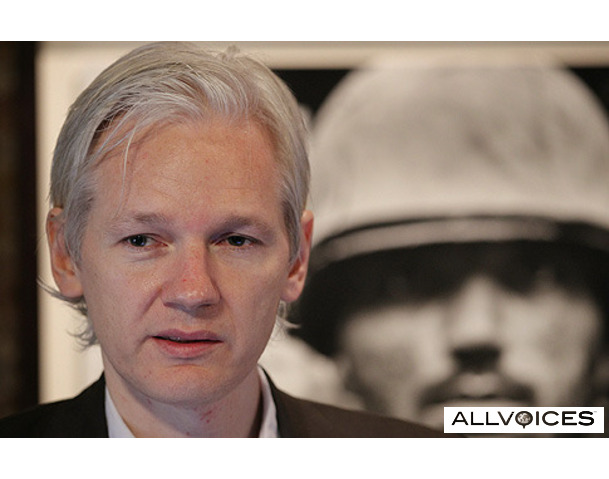
Julian Assange & Wikileaks: Why the Fuss?

Like many others I had never heard either Wikileaks or Julian Assange until a few months ago.

Wikileaks, apparently, has been operative for three years. Anyone can anonymously submit documents to Wikileaks; however that does not mean it will be published. The site, according to one BBC report, accepts classified, restricted, and censored material of political, diplomatic or ethical significance, but does not accept rumours or any other material that is already publically available.

In other words, Wikileaks, to use a jargon term, has created a niche in the cyber world. If you feel that the tapestry of your life is missing several threads because you are in the dark about what goes on in the corridors of power, then don’t fear: Wikileaks is here.

You have got to admit that whoever thought of this (Assange perhaps, as he, depending on who is writing the article, is either credited as or accused of being the founder of Wikileaks) was entrepreneurial.  The cyber space is teeming with ultra niche websites giving information on busty Mocha drinking scientists who fellate pandas, or websites which specialize in selling highly stylized images of women’s shoes on wonky coffee-tables, photographed from different angles. So, what is wrong with Website unilaterally drip-feeding confidential and sensitive diplomatic information? If you are the type who gets your kicks by reading titbits of information about, say, Karzai, the Afghan President, who, according to leaked cables, is thought by the USA foreign officials  to be a ‘paranoid and weak individual unfamiliar with the basics of nation building’, or by the antics of the Duke of York who railed against the British anti-corruption investigators in a formal function, Wikileaks is a godsend. And there are obviously people out there who want to read this kind of information. Otherwise why would Wikileaks be so popular? If the Website did not satisfy the market needs, it would be like this bloody blog which no one reads. Assange has obviously done his market research well.

You would have thought that America, the mother of innovations, the country that gave the world Facebook and Google, would be appreciative of Julian Assange’s daring enterprise. I do not know what the great American public is making of Wikileaks; however, judging from their responses, at least some politicians are going bat-shit mental. Sarah Palin, that towering presence in the American politics, has described Assange as an anti-American individual with blood on his hands. She wants Assange hunted down like al-Qaeda. (This from a woman who said on a live programme that North Korea was America’s ally.) Don’t you think that is a tad over the top? Also, given the fact that Americans have not been able to locate even an hair of Bin-Laden’s beard in the past ten years despite (or perhaps because of) the assistance of their trusted ally, Pakistan, you’d have to be brave to put your money on  ‘Operation Assange’ being successful. Another Republican senator has apparently gone on television saying any punishment short of a death penalty would be too kind for Assange. I doubt whether Americans, despite the proclamations of Sarah Palin who governs over several thousand square feet of ice and has, at best, a shaky grasp of international affairs, consider Julian Assange to be quite the same level of threat as Bin-Laden, but it would be fair to assume that he has managed to piss off the American administration effectively. I think President Obama has refrained from making any statement, and very wise of him—Assange, all said and done, is small beer, and it does not behoove the leader of the largest democracy in the world to get embroiled in a controversy that, at the end of the day, probably does not pose real threat to the American Empire. (I know, Sir Malcolm Rifkind is worried that the revelations of diplomatic cables can cause real harm, but he probably thinks putting curry in your mouth is dangerous.) You can well imagine how Obama’s predecessor, George W Bush would have reacted. (Oh, yes! He would have reacted: swiftly and reflexively, butchering the English language in the process).

The reason why some American politicians are frothing at the mouth (and what an entertaining spectacle it is) is of course that all the diplomatic cables to which Wikileaks have had access are American diplomatic cables.


Maybe I am missing something, but almost all the leaked cables reveal absolutely nothing that most people of above average intelligence and a modicum of interest in the world affairs did not already suspect.

Take the Duke of York’s ill-tempered (and ill-advised) outburst against the anticorruption investigators. That is what Prince Andrew does; that is what you’d expect him to do: to act and behave like a t**t. I guess when you come from a family of inbreds you end up with the intellect of an ox. So, no one is really surprised that Prince Andrew spoke like a t**t. Because, like his elder brother, Prince Charles a.k.a. the Jughead—who does not let trifles such as lack of knowledge and understanding come in the way of shooting his mouth off and advising intellectuals and highly trained professionals, who, even if nine tenths of their brains were removed, would still be cleverer than him—Prince Andrew is a moron of the first water; and it is in a moron’s nature to say stupid things. The only surprise is that Prince Andrew does not do it more often.

Or consider the description of Muammar Gaddafi of Libya in the American diplomatic cables. Gaddafi is described as ‘mercurial and eccentric’. Well, that is one way of describing old Muammar. I can think of some other adjectives. Indeed, the Americans, you can’t help feeling, were a bit charitable in their description of the thuggish (that is one adjective for you) Libyan dictator.

Here are two more ‘surprises’. Russia is described as being a ‘corrupt, autocratic kleptocracy centred on the Prime Minister Vladimir Putin’. President Medvedev is described as ‘Robin’ to ‘Batman’ Putin. My only thought when I read about this cable in the Guardian was that the Americans have got their metaphors mixed. Batman is supposed to be a do-gooder, right? And Robin is his side-kick. There is no doubt that the figurehead Russian President Medvedev is Putin’s yes-man; however, I don’t think that Americans meant to praise either of the pair—both of whom, if you believe the other part of the cable, are autocracts or kleptocracts or both—when they were described as Batman and Robin.

Talking of corrupt politicians, here is a cable about the Italian prime-minister, Silvio Berlusconi. The Americans think that Berlusconi is ‘feckless and vain’. Does anybody doubt that? What the cables fail to mention is that he is also an old lecher, forever on lookout for young women with chests worth pressing.

The former Australian prime-minister, Kevin Rudd, is described as a ‘mistake-prone control freak’ who made ‘snap announcements without consulting other countries and others within the government’. Well, he is Australian, so what do you expect? They are not renowned exactly for being thoughtful and considerate, are they? Kevin Rudd’s father was probably like him; and his father before him; all the way back to the first convict ship.

Continuing with the theme of weird and bizarre, how about the ‘Secret Bible’ of Scientology, which, depending on your views is either a religion or a collection of individuals who ought to have their heads examined? The Bible, as per the instructions of Scientology’s founder, Ron Hubbard himself, gives its followers tasks, which, the cables comment, are ‘difficult to understand’. Here is one instruction: ‘Find a tight packed crowd of people. Write it as a crowd and then as individuals until you have a cognition. Note it down.’ All that this revealed cable suggests is that the American Psychiatry failed Ron Hubbard. With early detection and aggressive treatment his psychosis might have responded. (I am also sure that if the man Muhammad referred to as Isa were to appear on earth today preaching his gospel, he too would get a hefty dose of Thorazine.)

Enough of buffoons.  Let’s see what the Americans have to say about the nasties of the world. The US secretary of State Hilary Clinton is reported in one of the cables as warning that the Saudis are the biggest sponsors of Sunni Islamic terrorism. Now I do not have access to the thousands of confidential documents available to Secretary Clinton, but I could have told you that over a pint in my local pub. Like Secretary Clinton I am concerned that the Saudis remain the financial base for al-Qaeda. And if I in Kidderminster can figure this out, then I shall put it to you respectfully that it is not a secret.

Here is another Wikileaks revelation. China is apparently frustrated with North Korea and has come to view its Communist dictator Kim jong-Il about as appetizing as a cockroach in chicken schezuan. By the way he is also a very nasty man. Well, slap my fanny and call me Amanda, but does this surprise anyone? North Korea’s economy is bankrupt, the population is starving, and the mad dictator, when he is not writing his treatise on Hollywood films, is going around selling cheap ballistic missiles, cobbled up from obsolete Soviet era technology, to fellow nutters like that guy from Iran. No one in his right mind would have this guy as a friend. So it is not surprising that the Chinese, renowned for their wisdom, are unhappy with the lunatic. That however does not mean that they will ditch North Korea straightaway, and the leaked cables do not suggest that either. So why the hoo-ha?

A number of Arab leaders in the Middle East, according to one leaked cable, called upon the US to attack Iran in order to halt its nuclear programme. The UAE Defence minister apparently described Mahmoud  Ahmedinejad as Hitler. Which, come to think of it, is very appropriate, not least because Mahmoud thinks the Holocaust is a Jewish conspiracy.

According to one leaked cable, the UK has ‘deep concerns’ about the nuclear arms in Pakistan falling into the hands of Islamic terrorists. Now, let me clarify one thing. The British get ‘deeply concerned’ about many things. Not a day goes by when the British newspapers and the media are not ‘deeply concerned’ or 'scandalized' about something or the other. Anything will do. If it is not Pakistan’s nuclear arms, then it will be the dreadful sewage system in Cumbria causing the flooding following brief summer showers, or old grannies being left in pools of vomit and piss for two hours while the nurses were filling forms, or the British children becoming lard-buckets (especially those who have thick parents who can’t or won’t cook), or dreadful state of some or the other Northern town’s pavements causing dogs to lose balance, or whatever. What I am saying is that the British are in a permanent state of concern, and their concern is not necessarily indicative of how things necessarily are. However, in this instance the British concerns about Pakistan’s nuclear arms may be justified. At least once a month I read articles in the newspapers about how Pakistan is a hotbed of Islamic terrorism. Also, given the fact that the average life expectancy of a Pakistani politician is less than fifty years, in turn linked to the higher than average risk of being bumped off by the Allah-brigade, it is not beyond the limits of credulity that there is a risk that these weapons will fall into the wrong hands. Pakistan’s giant neighbour and arch-enemy India has been bleating about it for years (neglecting to mention that it was India that started the nuclear arm race in the region).

The President of Sri Lanka, Mahinda Rajpaksa, according to a cable sent by the US ambassador to his country, is responsible for the war crimes. There is little doubt that this indeed was the case. What Sri Lankan army did, while sorting out LTTE, amounted to genocide. There were several articles in the Guardian about Mahinda Rajpaksa’s war crimes soon after he declared victory against LTTE.

What really brought a smile to my face was the leaked cable about the failing health of Fidel Castro of Cuba. The cable mentions: ‘He won’t die immediately, but he will progressively lose his faculties and become even more debilitated until he dies.’ You can almost taste the relish with which this cable was composed.

What do the American think of European countries? Chancellor Angela Merkel of Germany is described as ‘risk averse and rarely creative’. Well, they could simply have said she is German. Indeed you do not want the Germans to be too creative. Their creativity can get out of hand and become a spot of bother for the surrounding European nations.

Finally we come to the US diplomat’s assessment of the former Labour prime minister Gordon Brown who, they thought, in 2008, was finished. They are totally off the mark in this instance, I am afraid.  Brown was toast long before that.

While the leaked cables are indubitably genuine they are nothing more than conjectures and views of the diplomats who sent them, and, as such just about rise above the level of the gossip in the breadline. In many instances, such as the Arab leaders’ plea to the US to attack Iran, they had little to no influence on the ultimate decision taken by that country. So what the Wikileaks has revealed is not sensational by a long chalk. It might come as a surprise to Americans who are generally incapable of noticing anything that is beyond the perimeters of their arses, which, while admittedly humongous in about 60% of the population, are still not wide enough to form an informed view about the world we live in. But for those of us who can read and have a smidgen of curiosity about what is going on in the world, none of the leaked cables has revealed anything that is really new. That said, what is leaked is amusing and entertaining, if only because the politicians lie all the time. The leaked cables have thrown into sharp relief the difference between what they preach and what they actually think (especially true of the British, who are hypocrites of a very high order). They are all poseurs, every last jack of them. But then we knew that anyway.

So I am far from persuaded that Julian Assange is some sort of torch-bearer for freedom of information.  He is probably a geek, a computer nerd, and a hackster who (judging from the newspaper reports of the sex scandal he is embroiled in) does not like to wear a condom while having sex. Assange and his team of lawyers are seeing political conspiracies behind the sexual allegations levelled at him. His solicitor, Mark Stephens, theatrically declared that ‘dark forces’ were at work, honey-trap was set etcetera. That’s codswallop. If you read the account of what happened in Sweden in August 2010, admittedly from the point of view of the two women, in the Guardian, a newspaper that is by and large supportive of Assange, you cannot escape the conclusion that the US had nothing to do with the allegations. The accusations of rape, molestations etc. are linked not to the leaked US diplomatic cables on Wikileaks (which has probably annoyed the American administration) but to what Assange and the two women got up to in bedrooms. I shall resist the temptation, difficult though it is, to go into the salacious details (including the identities, complete with photographs, of the women) which are all over the net.) Maybe there is some truth in the women's allegations; maybe there isn’t, and Assange, as he is protesting, is innocent of any wrongdoing. Maybe the women have some hidden agenda. All these are conjectures and, at this stage remain unproven. (Isn’t it curious how public revelations of these types turn everyone into an amateur detective?). What also remains unproven, despite the less than subtle hints of Assange’s solicitor, is that the women are American agent provocateurs, and that the sexual allegations are part of some sort of big political conspiracy. If there ever was a honey-trap, it was not set by the Americans. Reading the Guardian article, you can’t help thinking that if only Assange had worn a condom when he had sex with the two Swedish women, or, afterwards, had agreed for a clap test instead of going into a paranoid mode, he would have saved himself a lot of bother.

Assange has announced that he is worried that he would be extradited to America (therein lies another irony; Assange is worried, with good reasons, that in America, the supposed leader of the free world, he would not get justice). And worry he might. If you stick your head inside a beehive and irritate the bees, be prepared to be stung.

Friday, 3 December 2010

Book of the Month: Nothing to Envy (Barbara Demick)

North Korea, officially the Democratic People’s Republic of Korea (DPRK), is an anachronism from the Cold War era of the twentieth century, which has survived, against all odds, into the twenty-first. The North Korea watchers were predicting the demise of Kim-Il-Sung’s totalitarian regime at the beginning of the 1990s, when the Stalinist dictatorships in the satellite Eastern Bloc countries began collapsing like packs of cards. However, twenty-one years after the fall of the Berlin Wall, the vice-like grip of the Korean Worker’s Party on this tiny country in the Korean peninsula—flanked on either side by the Yellow Sea and the East Sea—and its twenty-three million benighted citizens, shows no signs of weakening. Included by George W Bush in his axis of Evil, North Korean regime seems to thrive in its isolation even as the population starves to death.

The North Korean dictatorship, with its state-controlled, ineffectual and stagnating economy, was propped up by the Soviet Union for decades by offers of almost all the essential commodities at heavily subsidized rates. From 1980s onwards, with its non-functioning industrial and agricultural sectors North Korea came to depend almost entirely on the largess of the Soviets. Soviet Union was also a guaranteed market for what little North Korea produced. All that changed in the 1990s when the Soviet Union collapsed: North Korea descended literally into darkness when the Soviet supply of cheap fuel oil ceased. The millions of tons of staple grain that North Korea was purchasing at very friendly prices from the Russians became unavailable. However, Kim-Il-Sung and, after his death in 1994, his son, Kim-Jong-il (North Korea is a unique example of Communist dictatorship combined with dynastic rule), saw no reason to jettison the inefficient and unworkable quasi-autoarkic approach to economy. At a time when China and Russia were embracing Free Market with the zeal of a nymphomaniac who has spotted a man after having been marooned on an uninhabited island for months, North Korea remained (and still remains) an entirely state-run economy. The floods and famine that hit the country in the mid-1990s compounded the misery of North Korean people. In three years, between 1995 and 1998, 3 million people (12% of the country’s population) died of starvation. It is this period, the lost decade of the 1990s, the devastation and the unspeakable misery it inflicted on the people of North Korea, that is the focus of Barbara Demick’s excellent book, Nothing to Envy, winner of the 2010 Samuel Johnson prize.

Demick is a respected American journalist, whose previous work about the daily life in Sarajevo in the middle of the Bosnian war (she was a foreign correspondent for the Philadelphia Inquirer and lived in Sarajevo for a year) was a finalist for the Pulitzer Prize. She was posted in Seoul in 2001 as a foreign correspondent for ‘Los Angeles Times’. Over the next eight years Demick interviewed men and women who had managed to escape from North Korea. Nothing to Envy is the fruition of years of painstaking work. And the portrait that emerges out of the narratives of Demick’s interviewees is not pretty. While nothing that is revealed comes as a surprise, it is not the less shocking for it. What unfolds through the pages of Nothing to Envy is a tragedy of epic proportion.

What is remarkable about the six individuals—all of them came from the city of Chongjin in North Korea—whose stories Demick tells us, is that none of them was a political activist. They were all ordinary citizens; some had no political views, while some others were staunch believers in the purported socialist ideal of the dictatorship, as also in the improbable stories of mythical proportion systematically spread by the party about the ‘Dear Leader’ (as Kim-Jong-il is referred to in North Korea) and his father, Kim-Il-sung, the ‘Great Marshal’, who, sixteen years after his death, still remains the official leader of his country—the kind of grotesque oddity that is possible only in totalitarian regimes. All of defectors, except perhaps one, defected for one simple reason: there was nothing to eat, and they were starving.

In unostentatious language, unadorned by hyperbole, Demick describes the disintegration of a country and its descent into chaos. The factories stopped production; the power plants collected rust; the hospitals ran out of medicines; the trains stopped running, and the regime simply stopped paying salaries to its people. The regime’s response to emerging food shortage and ensuing disaster was—depressingly and unsurprisingly— propaganda and more propaganda. The official party newspaper –the only one that is available in North Korea—began extolling the virtue of having only two meals a day as the food shortage began to bite. In the next couple of years, even that became an extravagance only a few could afford, as the food disappeared from the market. The stories of famine and hunger reported by the defectors beggar belief. Rice became a luxury; meat and vegetables became scarce; the only grain that was available (in miniscule quantities) was corn; and the once proud people of this country were reduced to eating grass, and crushing barks of pine trees and conkers to add to the soup to thicken it. That led invariably to health problems and, not surprisingly, the young and the old suffered the most. One of the defectors Demick interviewed worked as a teacher in a nursery. She described how the once bubbly and energetic toddlers became progressively listless and lethargic; the families simply could not afford to give them food, and the school had long since stopped giving lunches. The toddlers had no energy left to participate in the activities and instead just sat, with eyes closed, in the class. During the recess, instead of going out into the playground, they lay down on the floor in a corner of the classroom. In the year prior to the teacher’s defection, the number of toddlers in her class dwindled down to fifteen from fifty. The statistics Demick provides are staggering. Apparently 42% of North Korea’s children show ‘stunted growth’—too large heads compared to torsos, and short limbs—the result of chronic malnutrition. The damage might be permanent. The food shortage, like the Communist regime of North Korea, showed no class distinction. One of the defectors Demick interviewed was a doctor, working in the Paediatric department of the Chongjing’s increasingly dysfunctional hospital, as the common antibiotics became unaffordable. The hospital stopped paying salaries to all its employees, but the authorities still forced the doctors to work (towards what end, you wonder, as there was little that the doctors could do). As time went by, the doctor became increasingly enfeebled and had neither the energy nor money to travel to her hospital. She spent long hours during the day, starving, in her bed. Interestingly, the doctor’s father, an ethnic Korean, had escaped China in the 1950s (when millions in China died of starvation as a result of Chairman Mao’s disastrous ‘great leap forward’) to North Korea, which, at that time, was more prosperous (indeed the North Korean economy was doing better than that of South Korea until the 1970s). The father remained a staunch supporter of the North Korean regime until his dying day (he starved himself to death because he could see no point in carrying on after Kil Il-Sung, the ‘Great Marshal’, died). And now, as the twentieth century neared its end, his daughter was starving in North Korea while China was frolicking in its newfangled affluence. This doctor eventually escaped to China, crossing the Tumen river—a common escape route for North Korean defectors. As the doctor entered the nearest village on the Chinese side of the border in freezing cold, and pushed open the door of the first house she came across, she noticed a big bowl of rice and chicken—neither of which she had tasted for years—in the verandah. Just then a dog from the house entered the verandah and began eating from the bowl. Then the realisation hit her: the dogs in China ate better than doctors in North Korea. 

All totalitarian regimes exert some or the other form of thought control over the population in order to cling to power.  Towards that end an atmosphere of distrust and suspicion is deliberately engendered, paranoia is systematically stoked. People are actively encouraged to denounce and report others for misconducts and infractions which cover a wide range of activities. Stalin in Soviet Union, Mao in China, and Stasi in East Germany excelled in this. The North Korean dictatorship appears to be no exception. Throughout the 1990s, as the famine raged all over North Korea, the regime was still whisking off people in the middle of the night to labour camps, styled on the Soviet gulags, for antinational activities such as doubting the capability of the ‘great marshal’ (Kim Il-Sung) in their personal diaries or for passing sarcastic comments after listening to one of the many clichéd, tub-thumping speeches of the party demagogues.  In many instances, members of the same family were encouraged to spy on one another. Two of the defectors Demick interviewed had known each other since their adolescence, and were each other’s first love. Their romance continued despite the many obstacles, not least the different social status of their respective families, for many years. For the best part of their six-year love affair both were thinking about —and in later stages actively plotting—escaping. Neither however dared to breathe a word of their seditious intentions to the other for the fear that the other might denounce them. As it happened the girl took the plunge first and, together with her mother and one of the sisters, escaped to South Korea via China. The boy followed a few years later; it was, however, too late, and by that time the girl had married a South Korean man and was a mother of two children.

If there is one thing a dictatorship is petrified of, it is the spread of knowledge. Stalin knew this, as did Chairman Mao, who, during the twenty-seven years of his demonic rule over China, went to great lengths to keep the population illiterate and ignorant. The more isolated the population is the more likely it will believe the lies and distortions of the regime. The North Korean people have been drip-fed for decades the standard Communist propaganda of America being the great Satan and South Korea being a willing slave of the Imperialist Western powers. During the decades of relative prosperity, the 1960s and the 1970s, the people must have found it easier to believe in the ‘Great Marshal’, who had the good fortune of dying in the beginning of the economic meltdown, and thus being associated forever in the memories of North Korean ‘hoi poli’ with the good times. When he died suddenly of a heart attack there were hysterical public outpourings of grief. His son, the ‘Dear Leader’, who became the country’s leader during very difficult economic times (made worse by his refusal to countenance any changes to the economic policy of the country), would appear to have had little difficulty in feeding the starving population with lies and exhorting them for further sacrifices. He could do that (and is still doing it) because a whole generation of North Koreans knows no different; they simply cannot imagine that life can be different, isolated as they are from the rest of the world. North Korea remains an Internet blackhole, one of the very few countries in the world that has chosen to stay offline. One of the defectors Demick interviewed was handpicked by the regime to enrol into University in Pyongyang. He had been on the North Korean “internet”, a closed system available only to academics to browse through various academic papers and a censored encyclopaedia the country had purchased. This man had heard of the Internet, and, when he crossed the border into China, he was curious to get on the Net. The problem was this man, who had belonged to the educational elites of North Korea, a graduate of one of the best universities in North Korea, had no idea how to do that. He was shown the ropes by a South Korean exchange student and with every click the world opened up to him. What he had begun to suspect about his country and the regime was confirmed; he also discovered what the rest of the world really thought about his country, and the contempt in which the ‘Dear Leader’ and his despicable regime was held.  

The title of Barbara Demick’s book is taken from doggerel the North Korean regime spread to propagate the personality cult of Kim-Il-Sung and later his son, Kim-Jong-il. All the children had to learn by heart and sing in their schools this song. One of the defectors narrated an incidence to Demick. Sometime in the late 1990s, when the North Korean economy was at its worst, this man was on a railway station. By that time, in all parts of the country were swarms of homeless children—in many cases the result of the decision by the parents to leave the food for the children, which meant that the parents perished, leaving the children orphans.  As this man waited on the railway platform, a group of homeless children arrived and began begging. A seven or eight year old boy from the group began singing. This little boy, soaking wet, hungry and filthy, his tiny, malnourished body almost completely lost in the adult-size clothes he was wearing, squeezed his eyes tight shut and mustering all his strength belted out the song which, in his surprisingly resonant voice, filled the platform:

Uri Abogi, our father, we have nothing to envy in the world.
Our house is within the embrace of the Worker’s Party.
We are all brothers and sisters.
Even if a sea of fire comes towards us, sweet children do not
                need to be afraid.
Our father is here.
We have nothing to envy.

‘Our father’, in Godless North Korea, is of course Kim-Il-Sung and (after his death)  Kim-Jong-il.

Years later the defector would recollect that it was this little orphan boy that pushed him over the edge. He found it unconscionable that the boy would be singing a paean to a man who had brought nothing but misery and ruination upon him.

Nothing to Envy is a work of great merit. Through the oral histories of North Korean defectors Barbara Demick has shone a searchlight on a country, which, to paraphrase Winston Churchill, is a riddle wrapped in mystery inside an enigma. In the process she has shown that which lies beyond the Potemkin Village of Pyongyang and which the secretive dictatorship has been desperately trying to cover: the silent misery of North Korea’s long-suffering people.

Trouble with North Korea

The news of North Korean bombing of a South Korean island and recent escalation of tension between the two countries, each of which claims to be the legitimate ruler of the Korean peninsula, is not surprising. It is not surprising because the two countries are technically at war with each other for the past six decades, as they never signed a peace treaty following the armistice in 1953, following three years of what most of us refer to as the Korean war. Equally unsurprising is American involvement in the conflict. For the past six decades, since the Second World War ended, American presence in the region, via her South Korean ally, is constant.

To borrow from a famous Winston Churchill’s quote, North Korea appears to many in the West as a riddle, wrapped in mystery, inside an enigma. Churchill was speaking in 1939, when the world, or at any rate Europe, stood on the cusp of a war that would see millions slaughtered and countries destroyed. He was predicting, rather he was indicating that he could not predict, what steps Stalin’s Russia would take. ‘But,’ Churchill went on to say, ‘perhaps there is a key. That key is Russian national interest.’ What might be the key to the riddle that is North Korea, the world’s most secretive state?

Perhaps, to understand the tragedy of the peoples of North Korea, we need to look at the history of the Korean peninsula in the twentieth century.

With the surrender of Japan, in 1945, which brought an end to more than five decades of Japanese rapacity, the peninsula was ripe for picking by the two emerging superpowers, Soviet Union and the United States.

When Japan made Korea its colony in the first decade of the twentieth century, it embarked on one of the most audacious experiments in the twentieth century:  erasing cultural identity of 24 million Koreans. Korean language and literature were banned from public life and the use and study of Japanese language was made mandatory. During the Second World War Japan ruthlessly exploited Korean resources towards war efforts. Several million Korean men were forcibly conscripted in Japanese labour camps; millions more were sent to work in other parts of Japanese empire and in Japan itself. As the war progressed, Korean men were conscripted into the Imperial Japanese army. When America dropped atomic bombs on the two Japanese cities of Hiroshima and Nagasaki, more than fifth of the millions who died were Koreans labourers.

As the Second World War neared its end, Soviet Union, as per the agreement with the USA, declared war against Japan, and, within days, occupied what is now North Korea. In the next two weeks the Soviet army reached the 38th parallel and awaited the arrival of the Americans in the South. Once again the fate of the Koreans was in the hands of those who had no connection—geographical or cultural—to the peninsula, although it would be fair to say that Communists had presence in the undivided Korea under Japanese rule and had provided resistance to the Japanese occupation. By this time, though, seeds of suspicions had been sowed between the two Second World War allies, and the Americans seriously doubted that the Russians would honour their part of the Joint Commission, the US-sponsored agreement of occupation of Korea. In the Postdam conference, the Allies unilaterally divided Korea without so much as by your leave of the Koreans. The decision had become a foregone conclusion when colonel Rusk and colonel Bonesteel III demarcated the two ‘occupied zones’ at the 38th parallel, a decision, as Rusk would later clarify, that was taken in thirty minutes, even though the 38th parallel was further North than what he, at that time, felt the US forces could realistically reach. The Russians agreed to this demarcation line, even though it meant that the zone under their control would be smaller than that under American control, as Stalin wanted to be in a stronger negotiating position in the Eastern Europe. It was agreed that the two divided parts of Korea would remain under the ‘trusteeship’ of the Soviets and Americans for five years, until 1950. (It is tempting to compare the partition of the Indian subcontinent, which happened around the same time (in 1947). The British, who had been in charge of undivided India for more than 150 years, left behind a bloody mess (which resulted in the largest forced migration of peoples in the history of twentieth century); but they at least made some efforts to take into consideration the will of the people. Almost all of what is now Pakistan chose to secede from India in a plebiscite.)

Both the Soviets and Americans set about establishing what were for all practical purposes puppet governments in the parts of the peninsula under their control. Let’s look first at what happened in South Korea. Lieutenant General Hodge of the United States directly controlled South Korea via the United States Army Military Government in Korea (USAMGIK). He forcibly dissolved the People’s Republic of Korea (PRK) to which the Japanese had handed power. PRK was headed by a Korean politician named Yuh Woon Hyung. Hyung was a re-unification activist who agitated for the independent reunification of Korea (in which neither of the superpowers had any interest). Hyung was left wing in his political beliefs. In 1920 he became a member of the Korean Communist party. Four years later he joined Sun Yat-Sen’s Chinese Nationalist party (Kuomintang). In 1929 he was arrested by the British for daring to criticise Britain’s colonial policy and was handed over to the Japanese in Korea. He was imprisoned for three years. Upon his release he kept himself busy by participating in a variety of underground anti-Japanese activities in Korea. In August 1945, when Japan surrendered, General Abe transferred the power to Hyung in return for safeguard of the Japanese in Korea. However, Hyung’s obvious leaning towards the left made him a suspect in the eyes of the Americans. Lt. General Hodge wasted little time in summarily abolishing Hyung’s government. In the next two years Hyung maintained a centre-left position, which won him few fans in the extreme right or left wing groups. In 1947 Hyung was assassinated, in South Korea, by a right wing extremist.

In the North, PRK’s local structure was maintained under the Soviet occupation and went on to form the basis of the Worker’s Party of Korea, the party that has controlled North Korea for the past six decades. In the South, the Americans wanted nothing to do with Hyung’s crypto-Communist policies.

Americans now desperately wanted a ‘democratically elected’ Korean leader who would head South Korea. The chosen man was Syngman Rhee, a rabidly anti-Communist, Right wing Christian, who came with the personal recommendation of the Generalissimo Chiang Kai-Shek, the Nationalist leader of the neighbouring China, who was fighting an internecine civil war with Mao Zedong’s Communists, a war he would lose. Rhee was ‘democratically’ elected after elections were held in South Korea. The Soviets first opposed and then boycotted the elections, arguing that the Americans honour the agreement in the Moscow conference and the two parts remain under the trusteeships of the two superpowers. In reality the Soviets knew that their chances of gaining power in American controlled Korea were slimmer than none. The Americans had achieved their goal: there was now a nominally independent, indigenous, and democratically elected Korean government in place in the South, which would serve as America’s bulwark against the Soviet led (Mao Zedong had not yet usurped power in China) Communist advancement in North Asia. The Republic of Korea (South Korea) was established. At least in the initial years, the puppet government, filled with politicians loathed by the Korean populace (many of them had served under the hated Japanese occupiers), remained intensely unpopular. This resulted, from time to time, in rebellions in the American controlled Korea (for example in the Jeolla region, where some local active units of PRK, together with Communist units, rebelled), which the Rhee’s South Korean army snuffed out with Forensic precision. This was the beginning of the Cold War, and the American anti-Communist paranoia had set in. The Americans had decided that communists everywhere in the world were under direct payroll of Stalin; and many members serving in the government of Syngman Rhee had no qualification other than that they were anti-Communists. Syngman Rhee was a dictator and he knew what he had to do keep his masters happy. He set about clearing South Korean politics of communists with commendable efficiency. He ruthlessly suppressed several rebellions against his regime and oversaw more than one massacre of his own people. In the post-war (that is the Second World War) South Korea, politicians who had any public stature were on the left. Many of them left for Pyongyang when the repression of the leftist activities began under Syngman Rhee.

What was going on in the Soviet controlled North Korea while the ‘democratically’ elected dictator ran amok in South Korea? As it happened, a Soviet approved dictator rose to power in the Northern part of the peninsula, a dictator who would rule the country for more than four decades, until his death in 1994. He was Kim Il-Sung.

Let’s step back in time and have a brief look at the Korean independent movement, and the rise of Communism in Korea. Korea became vulnerable to Japanese expansionism in the late nineteenth century. In the first decade of the twentieth century, after Japan’s victory over Russia in 1905, there were no limits to Japan’s imperial ambitions. Other Imperial powers of the time, such as Great Britain, turned a conniving eye when Japan invaded Korea in 1910. The resistance to Japanese occupation, which started immediately, was provided by disparate religious, military, and Royalist groups. The Communist party of Korea was formed in secrecy in Seoul, in 1925 (Japan had banned communism in the colony). The communists played their role in the resistance movement, although right from the beginning the party was afflicted by sectional feuds, forcing the Comintern (Communist International—an international organization funded by the Soviets) to disband it. Some of the members of the Korean Communist party escaped to China and became members of the Chinese Communist Party.

Kim Il-Sung, or the ‘Great Marshal’ as everyone in North Korea is forced to refer to him as, had an interesting background. Born as Kim Song-ju, in 1912, into a deeply religious family, Kim’s maternal grandfather was a Protestant minister, while his father was an elder in the Presbyterian Church. The family was not poor although it was not very rich either. According to official North Korean publication and extensive accounts left by Kim Il-Sung himself in his later life, his family was involved in anti-Japanese activities and fled Japanese persecution in 1920, to Manchuria. Some have suggested that the family, like thousands of Korean families, was fleeing famine and not Japanese persecution. It is possible, though, that the family played some minor role in anti-Japanese resistance. Kim would have been eight when the family settled in Manchuria. Kim’s father died in 1926. It was around this time that Kim became interested in Communist ideology. He became a member of an underground Marxist Youth Organization and participated in subversive activities. He was arrested and jailed for several months in 1929. In 1931, the year Japan invaded Manchuria, Kim joined the Chinese Communist Party and participated in guerrilla warfare against the Japanese occupiers in Manchuria. Kim rose steeply within the ranks of Chinese Communist Party. In his later life Kim would make much of the guerrilla warfare and the North Korean Communist party systematically build his personality cult as some sort of young Communist Robin Hood. There was probably a kernel of truth in these exaggerated claims. Kim continued with his guerrilla activities throughout the 1930s, but, as the decade neared its end, relentlessly pursued by Japanese troops, he escaped into Soviet Union. It is not known what Kim did in Russia: either he sat out the Second World War in Siberia along with other Korean leaders in exile(more likely, as Stalin was hesitant to anger the Japanese by letting the Koreans use the USSR as a base for their anti-Japanese activities) or he joined the Soviet Red army and fought in the Second World War (less likely). Sometime during this period, either before or after he escaped into Soviet Union, Kim assumed the name Kim Il-Sung, which meant ‘becoming the Sun’. The same name was assumed earlier by a prominent early leader of the Korean resistance movement. (For a long time rumours circulated that the young Kim was somehow switched with the ‘original’ Kim.)

When Soviet declared war on Japan, in 1945, and the Soviet army, much to Stalin’s surprise, rolled into Pyongyong without any resistance from the Japanese, Stalin wanted a puppet regime in North Korea (just in the same way the Americans wanted a puppet regime in South Korea). Kim Il-Sung was Stalin’s man. Laverenti Beria, who was tasked with the job of selecting the candidate, suggested Kim Il-Sung’s name. Kim, who was only in his thirties at the time, was widely believed to have been chosen by Stalin because, having spent most of his life outside Korea, he was not viewed by Stalin as someone with any links with the Korean Communist party, which Stalin had disbanded years earlier for being too nationalistic. Stalin wanted someone in place in North Korea who would forever look towards Moscow for support and guidance.

When Kim Il-Sung arrived in North Korea, he could not even speak Korean; his education, such as it was, was in Chinese. The headquarters of the Korean Communist Party were still in Seoul, which was under American occupation. In the years leading to the Korean War, Kim Il-Sung, with generous help from Stalin, built up a formidable army and air-force. When the Americans carried the elections in South Korea and instated Syngman Rhee, Stalin followed suit and the Democratic Republic of Korea came into existence (with Kim Il-Sung as leader) days after the Republic of Korea was created. True, there were no elections in North Korea that elected Kim Il-Sung, but difficult as it may seem to believe now, Kim Il-Sung was far more popular at this time in North Korea than his counterpart in South Korea. The Korean populace respected Kim for his years of anti-Japanese activities (albeit in the neighbouring China), which Rhee had sat out in Hawaii. Within two years North Korea had become a proper Communist dictatorship. All walks of life were dominated by the Communists.

Both the North and the South Koreans, backed by their respective masters, declared themselves to be the only lawful governments of the peninsula. It is beyond the scope of this post to go into the details of Korean war (that is for another day); however, contrary to what many probably believe, the war did not start suddenly one June morning in 1950 when the North Korean army crossed the 38th parallel and invaded South Korea. The North Korean invasion was preceded by a long and sustained period of aggression by both sides involving incursions into each other’s territory. What added immeasurably to American paranoia (probably with good reason) was the news that the Soviets had detonated their first atomic bomb, and, in the neighbouring China, Communists, under Mao Zedong, gained control of the country, forcing the US-backed Kuomintang Generalissimo Chiang Kai-Shek to leg it to Taiwan, taking with him millions of American dollars from the Chinese treasury.

The Korean war finally ended in a stalemate—with both sides taking each other’s capitals only to lose it to the other side, and the control of the territories going back and forth—during which US air raids devastated North Korea, selecting Pyongyang for special punishment; most cities in North Korea suffered almost total annihilation. When the UN—mostly American troupes— captured Pyongyang, Kim Il-Sung, the brave guerrilla fighter against the Japanese, fled to China. He was reinstated by the Soviets when the war ended.

Kim Il-Sung’s regime was no different from other Soviet imposed Stalinist regimes in Eastern Europe. They were all, on the face of it, multi-party ‘people’s democracies’ in which Communists were part of the coalition. In reality the Communists were firmly in control and the coalition partners were allowed little autonomy and less influence. Within the Korean Communist Party (which later became Korean Workers Party) Kim Il-Sung soon assumed complete control.

What is almost difficult to believe, given the dire financial state of North Korea, is that from the 1950s to 1970s, North Korean economy was actually doing better than the South Korean one, even though North Korea received (relatively) less help from the Soviets and the Chinese than the South Koreans did from their American masters.

North Korea’s position became tricky with the Sino-Russian rift following death of Stalin. The Soviets became annoyed with Kim Il-Sung as they felt that he was leaning towards Mao’s China. In fact Kim-Il-Sung tried to be clever, and propagated his famous ‘Juche’ theory, which preached self reliance. The result was a gradual decline in Soviet aid to North Korea over the years. In due course Kim Il-Sung removed all reference to Marxism and Leninism (which he rejected as European notions) and ‘Juche’ became, for all practical purposes, an ultra-Nationalistic form of Stalinism.

Almost six decades after the Korean War ended, the winds of war are once again flowing through the Korean Peninsula, after the North Koreans shelled the South Korean island of Yeonpeyong, which sent the Americans rushing to the aid of their South Korean ally, and a depressing rhetoric consisting, in equal parts, of paranoia and deranged grandiosity, has started from the North Korean regime. It is not surprising. Kim Jong-Il, the son of Kim Il-Sung, ‘a flabby chap who likes to drink and enjoys public adulation’, according Wikileaks documents, inherited a completely ruined economy when his father dropped dead in 1994. His response to the economic crisis facing his country was to rely almost entirely on military. In the 1990s, North Koreans began producing very crude but cheap ballistic missiles, produced from obsolete Chinese and Soviet designs. These missiles became available to any regime that was willing to pay for them. Many of these missiles were sold to countries like Iran and Syria which the US considers as enemy. The North Korean nuclear programme, which began on a small scale in 1980 via a Soviet donated reactor, gained momentum during Kim Jong-Il’s regime, even as his people starved to death through the terrible famines of the 1990s. Americans have gone, unsurprisingly, apeshit. Rumours have circulated for years that the Americans have kept nuclear missiles in South Korea. They certainly have a naval base and military presence in that country. But they don’t like it when third world countries dare to arm themselves with weapons that will actually prove to be a deterrent against what they think is imperialist bullying. (I am prepared to bet my left ear that the Americans will not dare to invade North Korea if the North Koreans indeed have nuclear capability. Iraq was invaded precisely because Saddam Hussain’s chemical cupboard contained nothing more dangerous than a packet of paracetamol.)  The other factor in the North Korean ‘problem’ which America cannot ignore is, of course, China. More than two decades after the first attempts to normalise relations between China and US, the relations between the two giants are still plagued by the two unresolved problems: Taiwan and the (technically) unfinished Korean War. Wikileaks documents reveal that China might finally be running out patience with their North Korean allies, described  by the Chinese vice Foreign Minister as a ‘spoiled child’ (there is Chinese euphemism for you) after North Korea carried out nuclear tests in April 2009. It seems that at least some high ranking officials in the Chinese Communist party have begun viewing North Korea as a burden, and not a useful ally. However, to assume that China will allow unification of Korea under South Korean control would be a step too far at this stage. Similar rumours floated when Kim Il-Sung died. China did not abandon Pyongyang then, and it is unlikely that it would do so any time soon.

In 1950, when Kim Il-Sung’s North Korea invaded South Korea, the ostensible aim was to unify the peninsula. Under Communist ideology. It was exactly the aim of Syngman Rhee, the American backed strongman in South Korea; he too was for unification of Korea, but under Capitalist ideology. The Communists enjoyed grass-root support even in South Korea at the time of invasion and the only reason, at that time, why the peninsula did not unify was the intervention of the Americans. That was a long time ago. A lot has changed since then. Communism has collapsed everywhere. China, North Korea’s last hope, is Communist only in name. North Korea remains virtually the only Stalinist regime in the world, and, unlike the situation at the time of the Korean War, the Communist dictatorial regime has probably lost its legitimacy with the people of North Korea. But any hopes of it imploding, East German style, are premature.